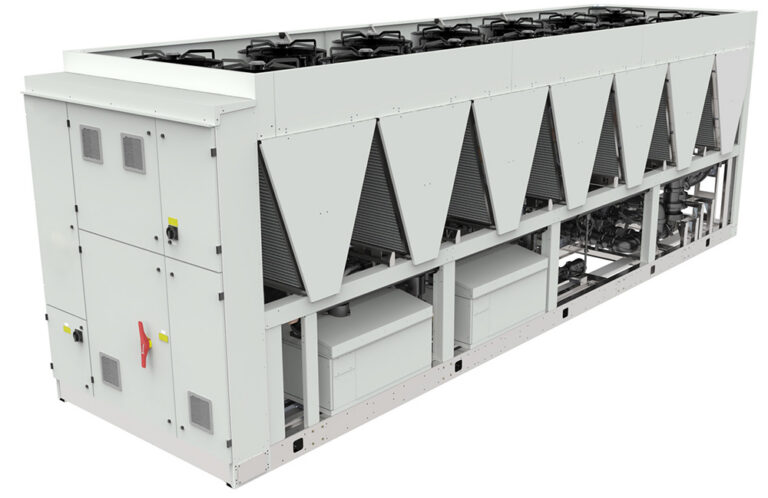
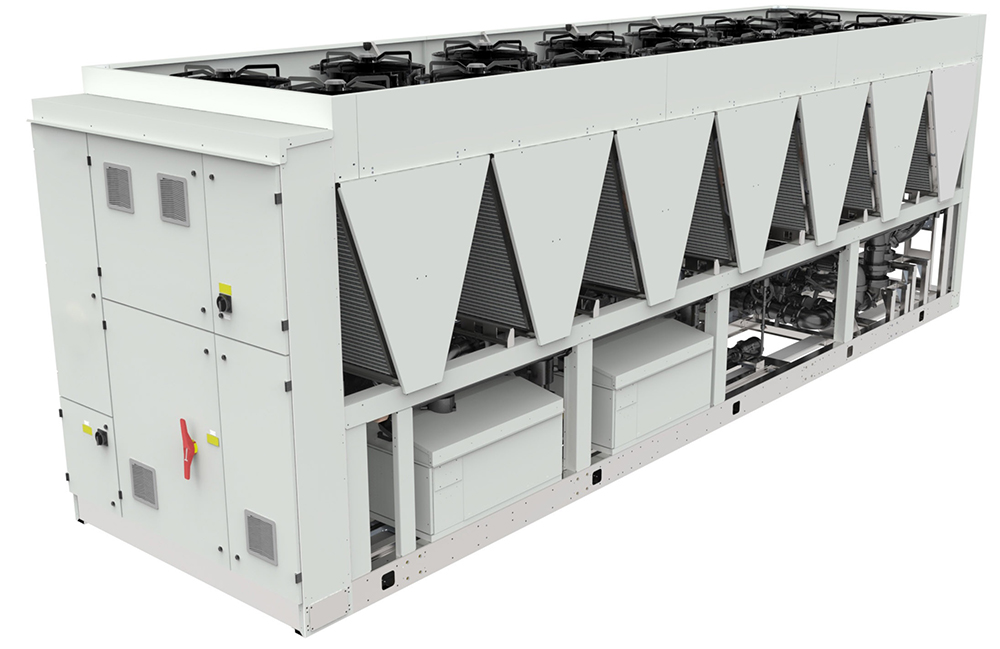
Airedale by Modine, a Modine brand, has announced the TurboChill 3+MW, an expansion of its TurboChill chiller platform aimed at high-density, GPU-powered data centers. Modine says the hybrid system combines advanced free cooling with air-cooled chiller heat rejection to reduce reliance on mechanical cooling and lower energy consumption while maintaining reliability for high-performance compute deployments.
The company positions TurboChill 3+MW as a hybrid approach for sites where ambient conditions and recirculation can make dry-cooler-only heat rejection impractical. “There is speculation that chillers may no longer be required as next‑generation chips are designed to operate at higher temperatures,” said Art Laszlo, Group Vice President of Global Data Centers at Modine. “However, customers continue to demand proven cooling and reliability to protect their investments, especially when high performance compute is installed on site.”
“Thermal architectures with dry coolers as the only form of heat rejection are not practical in many regions where varying ambient and recirculation conditions will still require refrigerant-based cooling for reliable data center operations,” said Art Laszlo, Group Vice President of Global Data Centers at Modine. “Airedale by Modine’s TurboChill platform delivers an ideal hybrid solution by maximizing free cooling where conditions allow, while deploying mechanical cooling to manage peak heat loads and the reliability customers expect.”
Modine says TurboChill 3+MW is designed to operate across a wide range of water temperatures used in modern data centers, with the goal of maximizing free-cooling hours in suitable geographies while maintaining precise temperature control for GPUs. It also calls out mixed-density facilities where only part of a site shifts to high-density racks that can run with 45 °C inlet fluid temperatures, while other racks in the same data center still require traditional facility water return temperatures.
Modine also notes operational edge cases it expects operators to plan for, including ambient heat waves, parasitic system loses, and local air recirculation that can overwhelm systems relying solely on high-temperature liquid cooling. The company claims air-cooled chiller technology is a proven path to minimizing Water Usage Effectiveness (WUE) and Power Usage Effectiveness (PUE) globally, and says chillers with free cooling can provide dry-cooler-style benefits while ensuring fluid return temperatures meet specification as temperatures rise.
Source: Modine