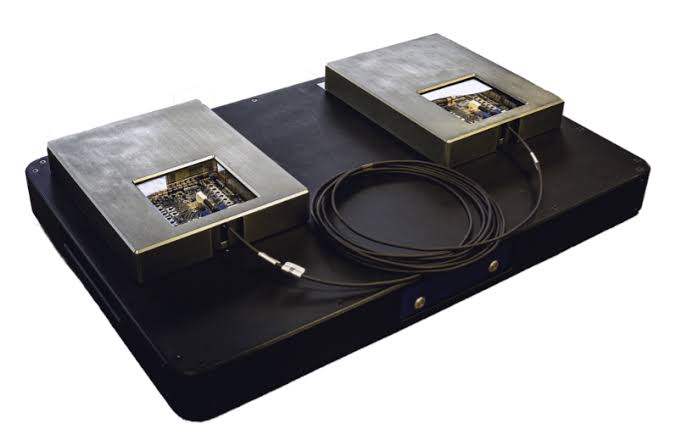


Frore Systems has announced multiple design updates to LiquidJet, its direct-to-chip liquid-cooling coldplate for AI data centers. The company says the changes are intended to improve cooling performance for high-power GPUs including the 1,950 W NVIDIA Rubin and 1,400 W NVIDIA Blackwell Ultra, while also cutting coldplate weight by more than half.
Frore Systems first unveiled LiquidJet at Open Compute Project (OCP) in October 2025, highlighting a “3D short-loop jetchannel microstructure” and reporting 50 percent higher cooling performance than current coldplates used with 1,400 W NVIDIA Blackwell Ultra. Frore Systems now says LiquidJet adds a multistage cooling architecture and “3D hybrid cell structures” to target GPU hot spots, with updated performance claims for both Blackwell Ultra and Rubin.
For the 1,400 W NVIDIA Blackwell Ultra, Frore Systems reports the new LiquidJet design increases cooling performance by 75 percent, or alternatively reduces maximum GPU die temperature by 7.7 degrees C compared to current coldplates. For the 1,950 W NVIDIA Rubin GPU, the company reports an increase in cooling performance of over 50 percent, or a 7.5 degrees C lower maximum die temperature. In parallel, Frore Systems says it has reduced LiquidJet coldplate weight by over 50 percent “while retaining full reliability.”
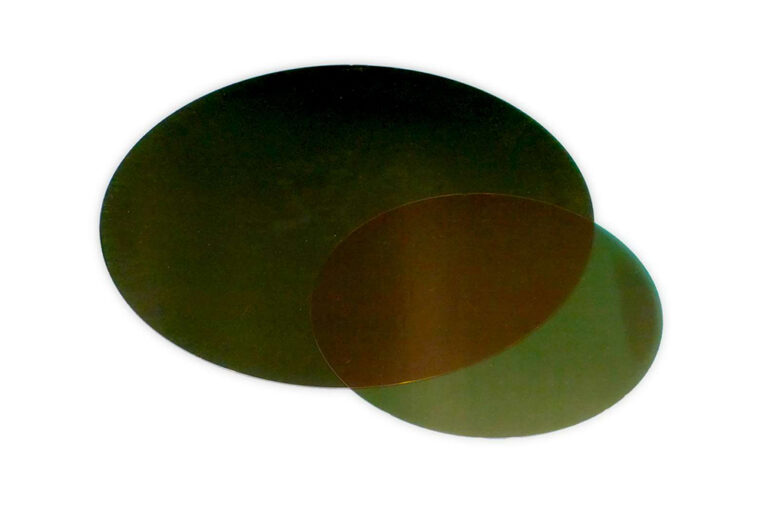
Technically, Frore Systems says LiquidJet is fabricated using its semiconductor manufacturing processes adapted to metal wafers, enabling “3D short-loop jet channel microstructures, multistage cooling and 3D hybrid cell structures” that can be precisely matched to hot spots in modern GPU power maps. Frore Systems positions the approach as an alternative to coldplates “limited by 2D flows in skived microchannels,” and says LiquidJet is designed as a drop-in upgrade that avoids redesigning racks, manifolds, or liquid loops.
Frore Systems says LiquidJet is intended to scale to future high-power platforms, including NVIDIA Rubin, Rubin Ultra, and NVIDIA Feynman platforms “exceeding 4,000W,” as well as custom hyperscaler application-specific integrated circuits (ASICs) with varying power profiles and densities. The company has also said it will demonstrate LiquidJet at CES 2026, including cooling for a 1,950 W NVIDIA Rubin GPU, 600 W/cm² “extreme hotspot cooling,” and single-reticle 1,200 W ASIC cooling.
Source: Frore Systems