
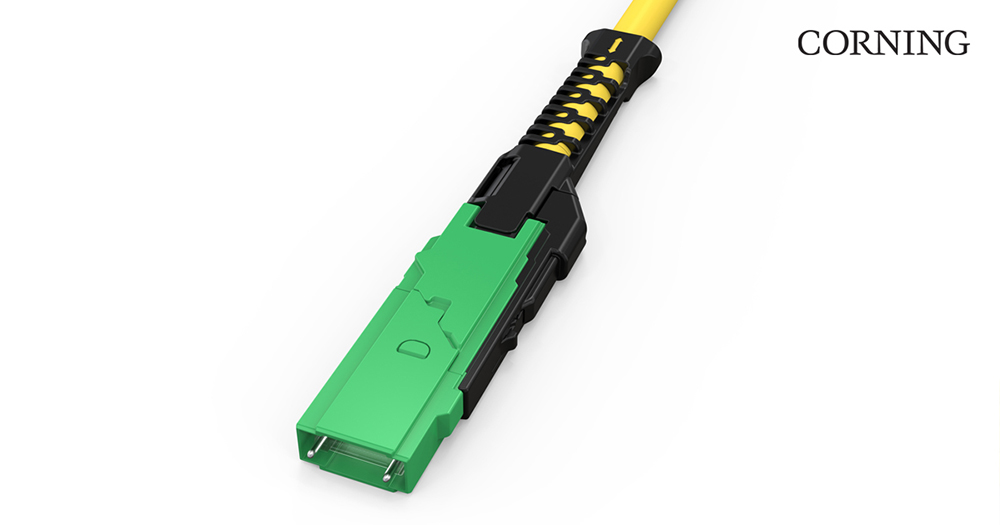
Corning has added PRIZM TMT optical ferrule technology to its AI data center connectivity portfolio through a licensing collaboration with US Conec. The move targets higher fiber counts in tighter spaces inside data centers, as operators push more optical links deeper into both scale-up and scale-out AI networks.
Corning becomes a licensee of PRIZM TMT, which uses precision-aligned microlenses rather than direct fiber-to-fiber contact. Corning says the approach is intended to support denser optical connectivity, faster and more reliable installation, and higher contamination resistance, with a reduction in total cost of ownership in demanding AI deployments.
The practical driver is familiar: as AI clusters grow and interconnect requirements climb, the number of optical connections in a single server rack or switch rack can rise quickly. Connector density, insertion performance, and install speed start to matter as much as the transceivers—because field time, rework risk, and cleanliness constraints can become the bottleneck long before you run out of front-panel real estate.
“AI infrastructure is pushing optical connectivity into new and more demanding environments,” said Mike O’Day, senior vice president and general manager of Corning Optical Communications. “By licensing PRIZM TMT, Corning is strengthening its ability to deliver scalable, fiber-rich solutions that help customers build larger, faster, and more efficient AI clusters, while aligning closely with the broader industry ecosystem.”
Corning plans to highlight PRIZM TMT technology at OFC 2026.
Source: Corning