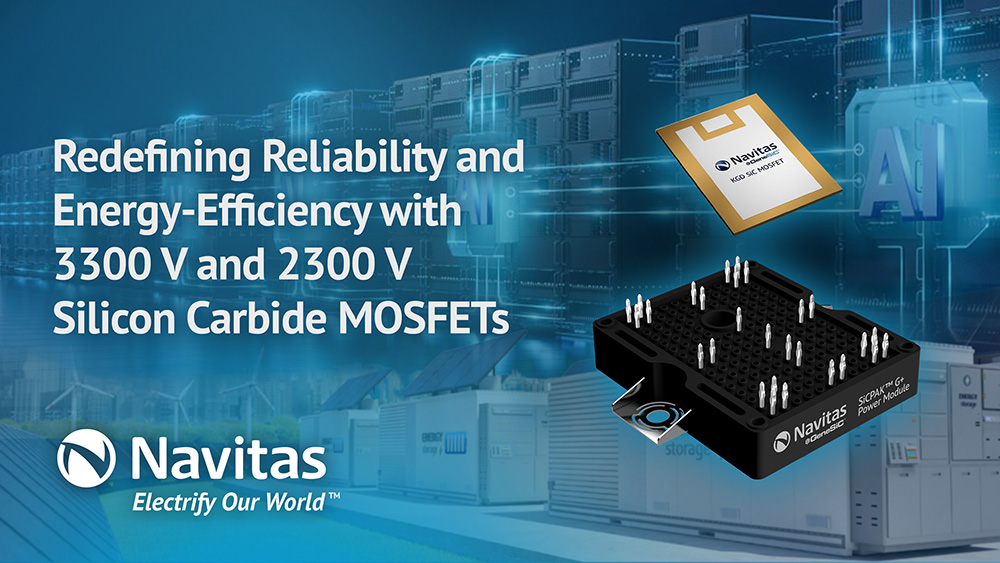
Navitas Semiconductor has announced the sample availability of its new 3,300-volt and 2,300-volt ultra-high voltage silicon carbide (SiC) products. These components, built on Navitas’ fourth-generation GeneSiC platform, come in power module, discrete, and known good die (KGD) formats and are aimed at increasing reliability and performance in demanding power electronics environments.
The new devices employ Navitas’ proprietary Trench-Assisted Planar (TAP) SiC MOSFET technology, utilizing a multi-step electric-field management profile to lower voltage stress and boost blocking capacity compared to both trench and traditional-planar MOSFETs. TAP technology also enhances long-term reliability, avalanche robustness, and switching performance — with lower on-resistance at elevated temperatures thanks to improved current spreading and optimized cell pitch density.
For high-power and high-reliability applications, Navitas is offering the new SiC devices in advanced SiCPAK G+ power module packages, available in half-bridge and full-bridge circuit configurations. These modules use an epoxy-resin potting process shown to deliver over 60 percent longer power cycling life and more than 10 times greater thermal shock reliability compared to silicone-gel modules. Integrating an aluminum nitride direct-bonded copper (AlN DBC) substrate and high-current press-fit pins, SiCPAK G+ modules aim for greater heat dissipation and current-carrying capacity per pin. Discrete SiC MOSFETs are available in standard TO-247 and TO-263-7 packages.
Navitas reports that it has introduced an AEC-Plus qualification process for these SiC products, extending beyond established AEC-Q101 and JEDEC standards. This benchmark includes requirements for dynamic reverse bias and gate switching testing, longer static high-temperature and high-voltage tests, and extended power and temperature cycling durations, tailored for critical infrastructure applications.
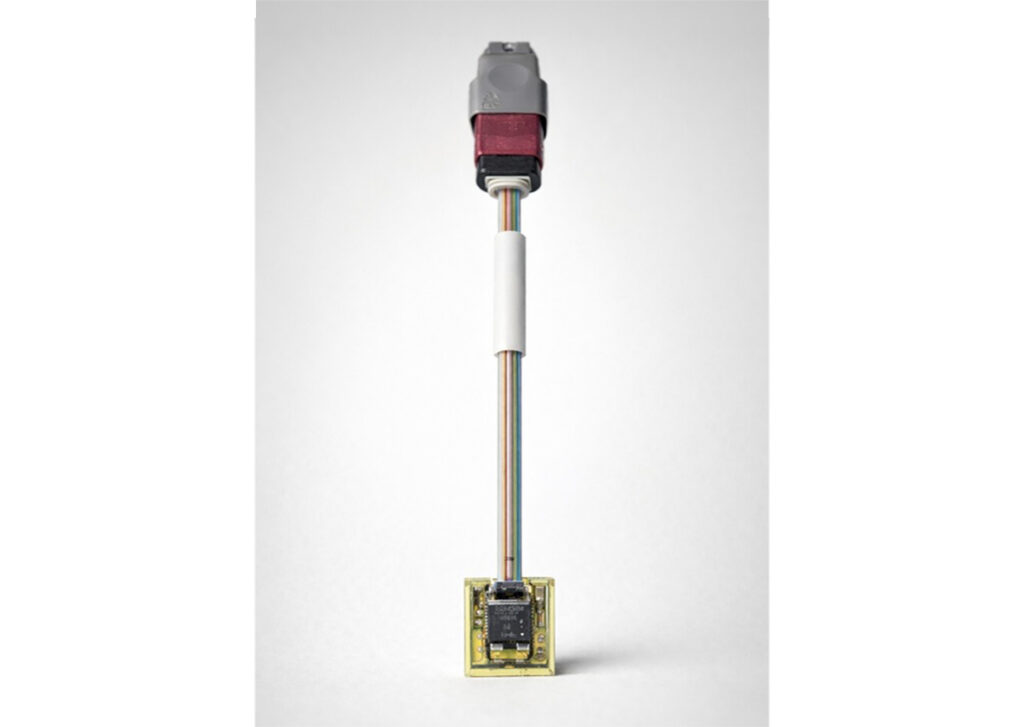
The company also offers these 3,300-volt and 2,300-volt SiC MOSFETs as known good die, supported by an advanced production screening process including room and hot temperature testing and six-sided optical inspection of singulated dies, designed to increase production quality and final module performance in ultra-high voltage applications.
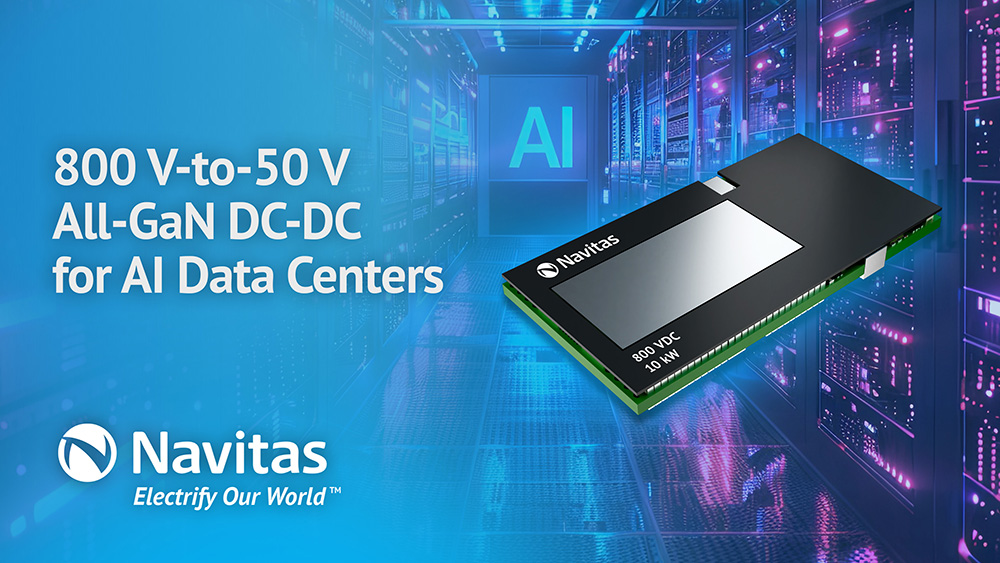
Navitas highlights data center solid-state transformers for artificial intelligence (AI), as well as utility-scale battery energy storage and renewable energy systems, as primary target markets.
According to Paul Wheeler, VP and GM of the SiC Business Unit, “Navitas’ new 3300V and 2300V SiC product portfolio allows our customers to push the boundaries of efficiency and reliability in solid-state transformers for AI data centers, as well as utility-scale battery energy storage and renewable energy to define a new standard for such mission-critical system applications,” Wheeler continued, “This line of reliable, high performance ultra-high voltage power semiconductors is expected to be a significant step in our roadmap to 10 kV SiC solutions. By combining our proprietary Trench-Assisted Planar SiC MOSFET technology with innovative power packages, we are able to extend reliability qualification and support more stringent production screening, to deliver industry-leading performance and robustness.”
Further technical details and white papers are available from Navitas. Sample requests and additional product information are available via Navitas’ website.
Source: Navitas Semiconductor