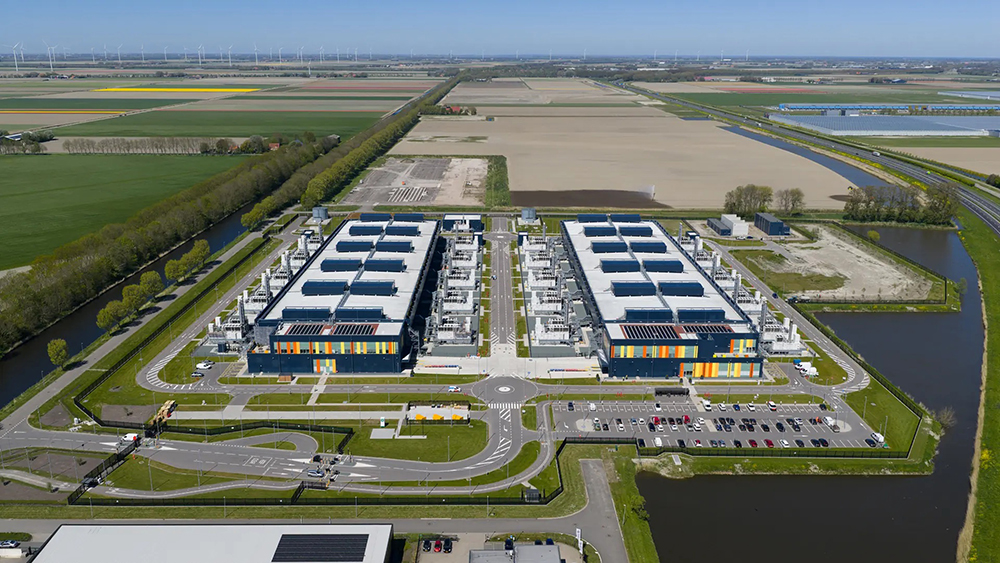


Prevalon Energy has announced the Hybrid Power Stabilizer (HPS), a data center-specific platform designed to actively stabilize power in hyperscale and mission-critical facilities. Built on the Prevalon Energy Storage Platform, HPS targets millisecond-level power control to manage rapid AI-driven load swings and support hybrid power architectures in always-on data centers.
Prevalon says traditional data center power architectures built around uninterruptible power supply (UPS) systems, spinning reserves, and slow-responding generation can struggle with rapid, dynamic load changes as facilities scale for AI training and high-density compute. The company positions HPS as an active stabilization layer for standalone, grid-connected, and hybrid environments, with control at the power-electronics level to respond instantly to load changes and reduce stress on turbines, electrical equipment, and downstream infrastructure.
HPS is designed for architectures that integrate on-site generation such as gas turbines or reciprocating engines, utility interconnections, and renewables. At the control layer, Prevalon says HPS is powered by insightOS, its US-built, utility-grade energy management system, providing millisecond response, secure on-premises control, and full system visibility for deterministic, real-time power control across complex data center architectures.
“The Hybrid Power Stabilizer is not a backup system or UPS —it’s active power control,” said Tom Cornell, President and CEO at Prevalon Energy. “AI-driven data centers introduce power volatility that legacy architectures were never designed to manage. HPS absorbs those load swings in real time, stabilizes voltage and frequency, and enables continuous operation across increasingly complex power systems.”
Prevalon reports it is executing on nearly 1.3 gigawatts of the HPS platform with hyperscale customers, with most deployments designed for standalone grid applications. The company says systems supporting these projects have completed factory acceptance testing (FAT) and are scheduled for delivery to project sites beginning in 2026. To validate performance under real-world operating conditions, Prevalon says it is conducting full-scale, third-party testing across its Energy Storage Platform, including AI training load profiles, dynamic operating conditions, turbine rotor dynamic models, and conventional and transmission characteristics representative of modern data center environments, in collaboration with a national laboratory, a major research university laboratory, hyperscalers, and AI campus developers.
Source: Prevalon Energy