

SiTime has introduced the Elite 2 Super-TCXO, a temperature-compensated oscillator the company is aiming at AI data centers where time synchronization can limit GPU utilization. The pitch is straightforward: tighter time alignment across distributed GPU workloads reduces wait cycles, avoids timeouts, and helps keep expensive accelerators busy.
SiTime’s chief business officer, Piyush Sevalia, said “industry reports show GPU utilization in AI clusters can be as low as 20 to 40 percent,” and tied that gap to timing errors that force GPUs into idle periods to prevent data corruption. Sevalia also said the industry is moving toward a target of 10 ns time synchronization across an AI cluster, down from 1 μs today, and that the Elite 2 Super-TCXO was developed after working with “leading AI system architects at hyperscalers and silicon providers.”
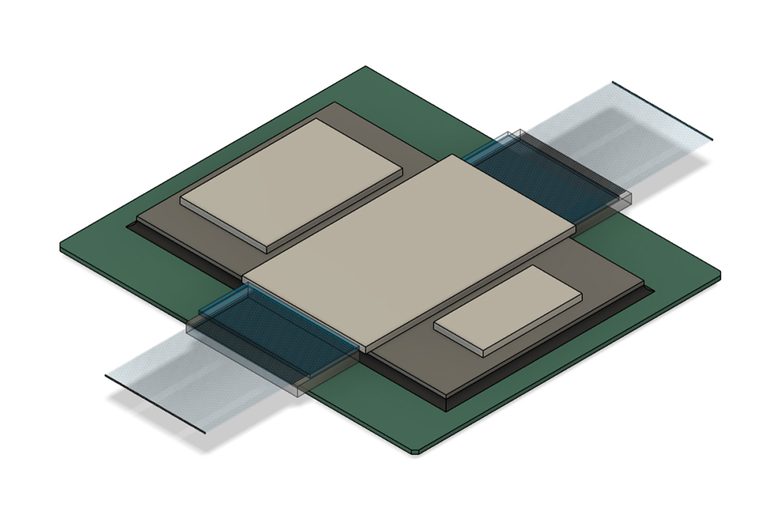
On specs, the Elite 2 Super-TCXO is designed for 1 ns time synchronization accuracy. Other published figures include ±2 ppb/°C dF/dT (frequency temperature slope), 6 × 10⁻¹² Allan Deviation (ADEV), and ±50 ppb frequency stability over -40 to 105°C. SiTime lists a 3.2 mm × 2.5 mm footprint (8 mm2) for its smallest package option, and also offers a 5.0 mm × 3.2 mm ceramic package. The company also calls out digital frequency tuning, resistance to shock, vibration, and board bending, and the elimination of “activity dips and micro jumps” associated with quartz devices.
For data center engineers, the practical implication is that timing hardware is getting pulled into the same optimization loop as networking and scheduling: if cluster-level synchronization is part of keeping accelerators fed, then oscillator performance stops being an abstract board-level spec and starts showing up as a utilization limiter. But SiTime’s utilization and performance-per-watt claims will ultimately hinge on system-level validation across real AI fabrics, not just oscillator datasheets.
SiTime said the Elite 2 Super-TCXO is sampling now, with commercial production expected in Q3 2026. Part numbers include SiT5234, SiT5235, SiT5434, and SiT5435. Dell’Oro Group vice president Sameh Boujelbene said, “As AI back-end infrastructure refreshes at a much faster cadence than traditional non-accelerated infrastructure, time synchronization accuracy becomes increasingly important to sustaining performance across rapidly evolving data center architectures.”
Source: SiTime