Keysight has added a PCIe 7.0 receiver (RX) test application to its PCIe 7.0 portfolio, aimed at validating receiver performance at 128 GT/s for next-generation compute, AI, and data center designs. The new offering is intended to round out end-to-end PCIe 7.0 physical-layer validation across transmitter and receiver testing.
The PCIe 7.0 RX Test application targets receiver stress testing at 128 GT/s, where calibration and stressed-signal generation get harder as data rates climb. Keysight links the challenge to both the lack of test equipment dedicated to receiver testing and increasingly complex requirements for calibrating receiver stress signals as the ecosystem moves toward PCIe 7.0 adoption.
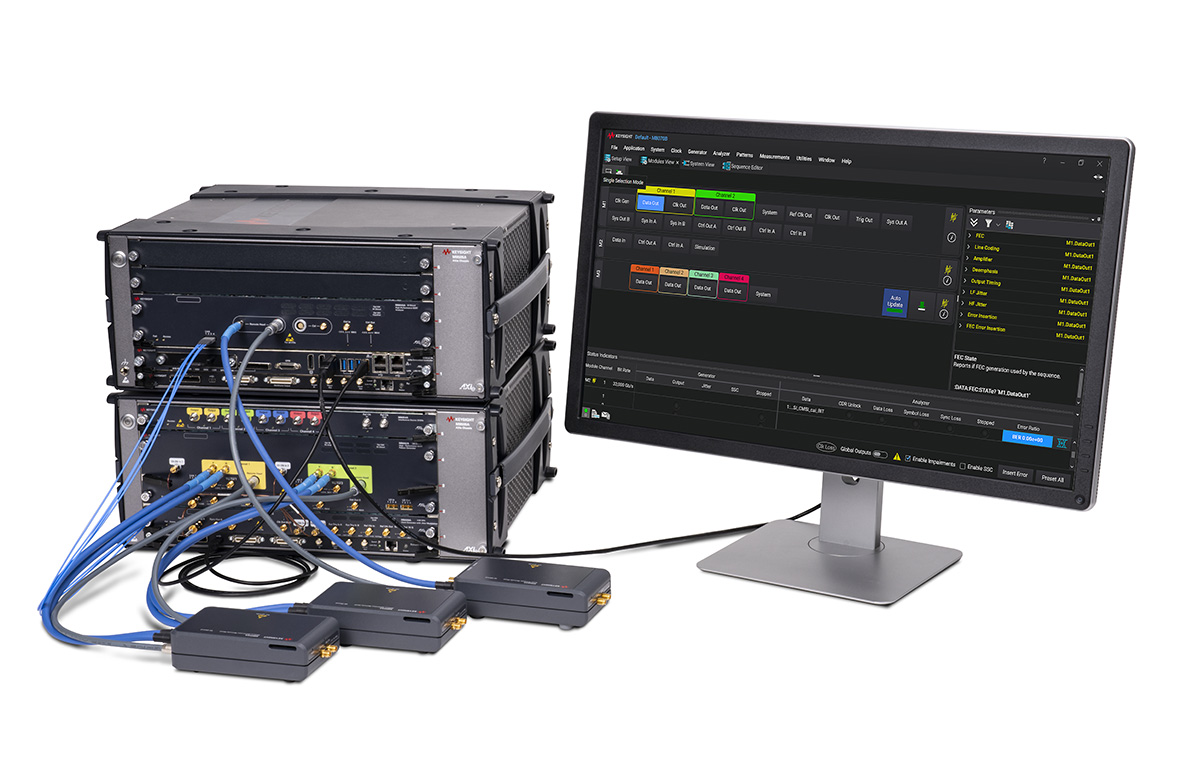
On the hardware side, Keysight points to its M8050A BERT family paired with the M8042A 120 GBaud pattern generator and the M8043A error analyzer as meeting PCIe 7.0 receiver stress test requirements for signal generation and analysis targeted at ASIC validation. On the software side, the new N5991PB7A software is designed to simplify calibration and control of PCIe 7.0 receiver stress signals, with automation intended to reduce setup effort and speed receiver characterization.
Receiver stress testing is one of the places where engineering teams can burn a lot of schedule: calibration steps, repeatability, and test setup complexity can become the bottleneck long before you run out of lane bandwidth on the bench. At 128 GT/s, small differences in stressed-signal generation and measurement confidence can have an outsized impact on whether issues are caught early in bring-up or late in a compliance cycle.
Keysight says the receiver stress calibration approach is designed to accelerate bring-up and validation via automated PCIe 7.0 RX workflows, reduce compliance risk at 128 GT/s through specification-aligned stressed-signal generation, and complement end-to-end PCIe 7.0 test when combined with its PCIe 7.0 transmitter (TX) test solution. “PCIe 7.0 receiver validation at 128 GT/s is one of the industry’s most significant signal integrity challenges,” said Dr. Joachim Peerlings, vice president of Network and Data Center Solutions at Keysight, adding that the expanded portfolio is intended to help customers “reduce risk, accelerate development, and confidently validate next-generation ASIC designs.”
Keysight lists additional information on its PCIe solutions and related test platforms, including the M8050A high-performance BERT.
Source: Keysight