Today’s data center builders leave almost no stone unturned in the search for construction schedule savings. Almost. Tod Savage, a Business Development Team Lead with Carboline, explains how earlier collaboration with coating manufacturers can reveal hidden savings without compromising on performance.
The Data Center Engineer: With so much hype around data centers and their technology, and zero hype around protective coatings, why should data center engineers engage with this topic?
These are specialized systems, and there isn’t always enough time during design to fully evaluate all the available options.
Tod Savage: Because getting it right early can save a tremendous amount of time, money, and headaches down the road.
What I’ve found working with engineers and architects is that they’re experts at designing buildings, developing complex processes, and bringing these massive facilities to life. But protective coatings, fireproofing, and resinous flooring are often areas where they don’t have the same level of expertise. And understandably so. These are specialized systems, and there isn’t always enough time during design to fully evaluate all the available options.
They know enough to put together a specification, but that doesn’t necessarily mean it’s the best system for the application or the most practical approach to construction.
That’s where early engagement really makes a difference. When we get involved during the design and pre-construction phase, we can help engineers and general contractors evaluate system performance, application requirements, constructability, and long-term durability before those decisions become locked into the specifications.
At the end of the day, it’s not just about selecting a coating. It’s about helping the design and construction teams make better-informed decisions that improve performance, simplify construction, and avoid unnecessary costs and delays.
DCE: How does the design-build delivery method impact coating specifications?
We’ve demonstrated opportunities to reduce the coating-related schedule by as much as 50% compared with traditional hot-dip galvanizing, depending on the project and fabrication sequence
Tod Savage: I think the biggest challenge with design-build is the speed at which these projects move. Design and construction are happening simultaneously, so decisions are often being made well before the entire design is complete.
I’ll give you an example. On data center projects, a lot of the exterior structural steel is specified to be hot-dip galvanized. There’s nothing inherently wrong with galvanizing. It’s a proven corrosion protection system. But what if there’s an alternative that provides comparable long-term protection while significantly improving the construction schedule?
That’s where our Carbozinc 11 / Armorlast system comes into play. We’ve demonstrated opportunities to reduce the coating-related schedule by as much as 50% compared with traditional hot-dip galvanizing, depending on the project and fabrication sequence.
The challenge is timing. Coating specifications are often buried toward the back of the structural documents and may not be finalized until 60% design or later. Meanwhile, the construction team is already moving forward with steel procurement and fabrication. With structural steel lead times potentially approaching 50 weeks on some projects, there’s very little room to revisit those decisions.
I’ve had engineers tell me, “Man, I wish I would have known about this earlier.”
And that’s really the point. Design-build creates a tremendous opportunity for early collaboration, but you have to get involved before the specifications and procurement decisions are locked in.
If we can engage the engineers, fabricators, and construction team early enough, we can evaluate alternatives that provide the required corrosion protection while improving fabrication flexibility, constructability, and overall project delivery.
It’s not about changing a specification just to change it. It’s about making sure the project team knows its options while there’s still time to take advantage of them.
DCE: How about fireproofing specs? That 50-week lead time is scary.
What we’ve found is that the best solution often isn’t one technology or one application method across the entire project.
Tod Savage: Absolutely, and fireproofing is another area where getting involved early can make a big difference.
There’s been a tremendous push toward shop-applied epoxy intumescent fireproofing because of the potential schedule advantages. It’s excellent technology, and shop application can be very effective. But the question we like to ask is, is it the right technology and application approach for every piece of steel on every project? Not necessarily.
One of the advantages Carboline brings is that we manufacture all three major intumescent technologies—epoxy, solvent-based, and water-based. That allows us to take a more objective approach to evaluating what’s best for the project rather than trying to fit everything into one technology.
We can perform the fireproofing calculations, evaluate the required fire ratings, and work with the design and construction teams to understand the fabrication schedule, steel erection sequence, and installation conditions.
For example, does it make sense to fireproof certain steel members in the shop? What happens to those members during transportation and erection? Will connections, welding, or subsequent construction activities damage the fireproofing and require additional field repairs? And would other areas be better suited for field application?
We take all those considerations and develop a project-specific approach that balances fire protection requirements, application methods, constructability, schedule, and total installed cost.
What we’ve found is that the best solution often isn’t one technology or one application method across the entire project. It’s a blended specification, using shop-applied and field-applied systems where each makes the most sense.
That’s where the real value of early design collaboration comes in. We’re not simply recommending a fireproofing product. We’re helping the project team develop a fireproofing strategy that meets the performance requirements while making the overall construction process more efficient.
DCE: What do build teams gain by collaborating with coating vendors and coating contractors earlier during design?
When we looked at the fabrication and coating process, the potential savings were approaching $2 million.
Tod Savage: The biggest benefits are better project efficiency, shorter construction schedules, and potentially significant cost savings. And on projects the size of today’s data centers, those savings can be substantial.
I’ll give you an example. Without naming the project, we were working with a structural steel fabricator after the original specification had already been issued. We were able to evaluate an alternative using a liquid-applied inorganic zinc coating system in place of traditional hot-dip galvanizing. When we looked at the fabrication and coating process, the potential savings were approaching $2 million. That’s a significant opportunity that might have been missed without that early collaboration.
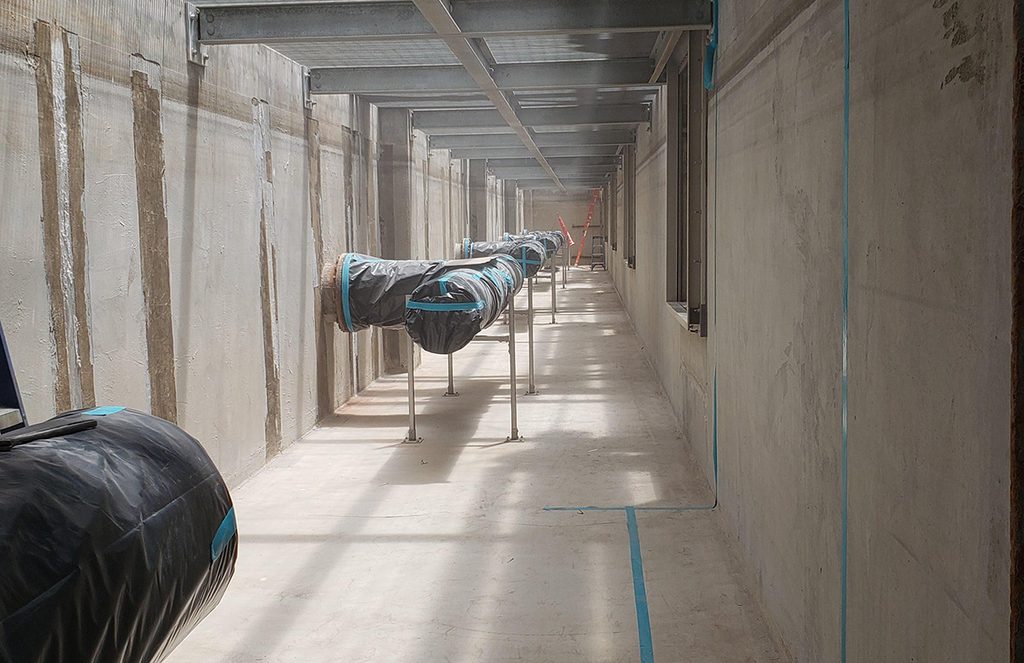
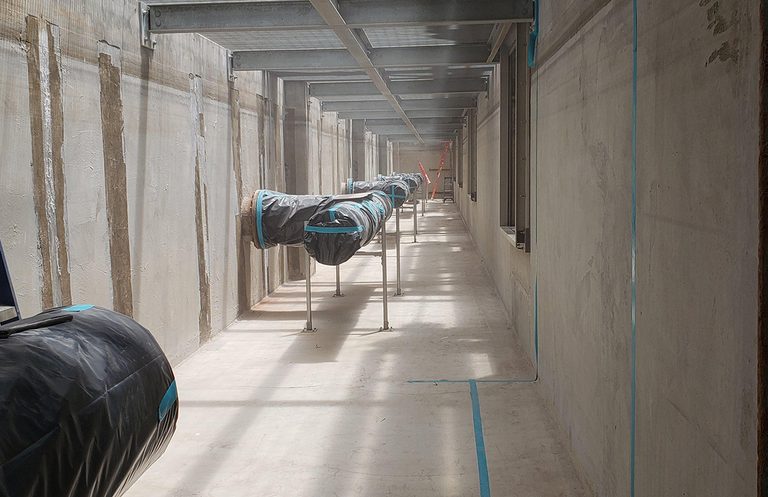
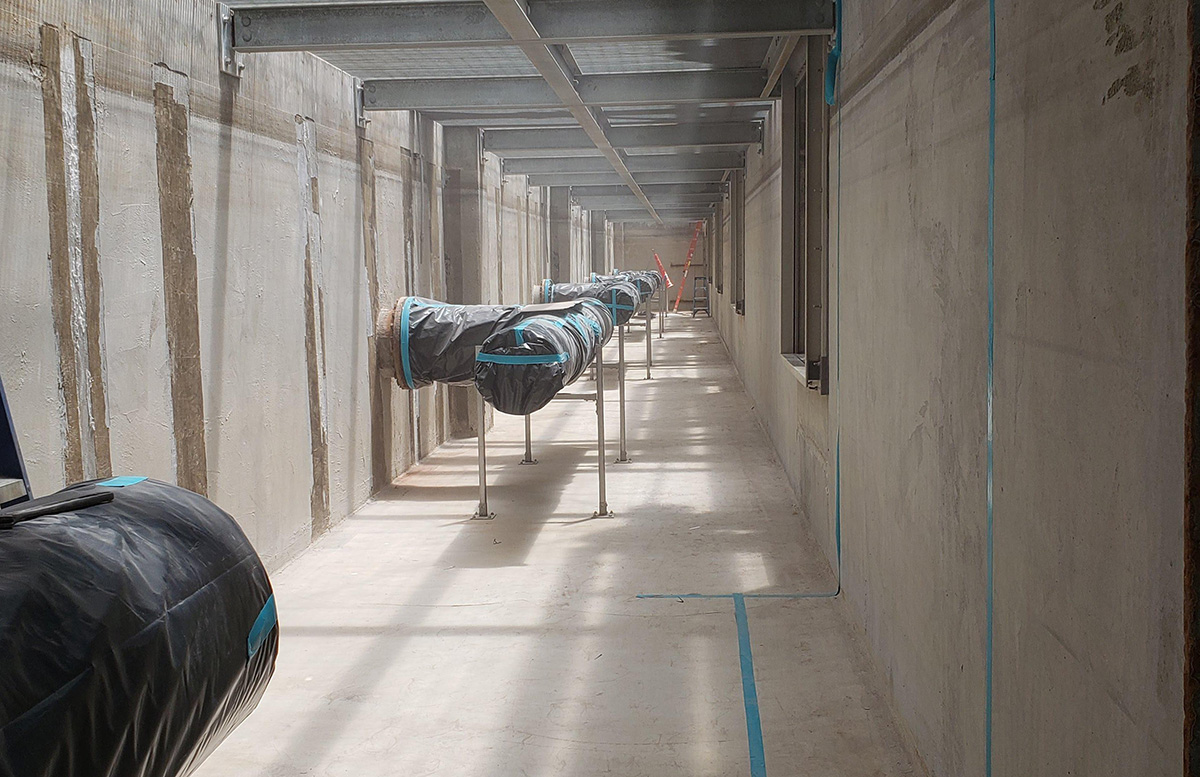
Another great example is mechanical piping and equipment. Think about the amount of piping associated with a large data center, particularly the cooling systems. Much of that piping requires insulation with an exterior protective jacket. It’s a labor-intensive installation that requires significant material handling, jobsite space, and often extensive scaffolding.
Depending on the operating temperatures and insulation requirements, liquid-applied thermal insulating coatings may offer an alternative for certain applications. These systems can simplify installation, reduce the need for bulky insulation and jacketing, and potentially eliminate some of the scaffolding requirements. In the right application, that can translate into substantial labor and schedule savings.
There’s also the long-term maintenance benefit. With traditional insulation, corrosion under insulation, or CUI, can develop beneath the insulation system without being visible. Confirming its presence often requires removing sections of jacketing and insulation to inspect the pipe.
With a liquid-applied insulative coating, the surface is generally much more accessible for inspection. That doesn’t eliminate corrosion risk entirely, but it can reduce the areas where moisture becomes trapped and make inspection and maintenance considerably easier.
And that’s really what early collaboration is all about. When manufacturers, coating contractors, engineers, and construction teams sit down together during design, we can look beyond the individual product and evaluate the entire installation process.
We’re looking at performance, labor, access, sequencing, schedule, and long-term maintenance. Sometimes relatively small changes to a specification can create significant benefits across the project.
The goal isn’t simply to sell a different coating system. It’s to help the project team identify opportunities they may not have known existed, and capture those benefits before construction decisions are locked in.
DCE: How can engineers take best advantage of manufacturer partners after design, once construction is underway?
And on a large data center project, where multiple trades are working simultaneously and schedules are extremely tight, having that level of technical support readily available can make a real difference.
Tod Savage: I think the biggest thing is understanding what resources are available to them and actually taking advantage of that support.
We spend a lot of time on the front end working with engineers and architects to make sure the right coating or fireproofing system gets specified. But once construction starts, that’s where another important part of our value comes into play.
At Carboline, we have a tremendous field technical service team. These are people who work directly with contractors every day, helping them understand the products, confirming the proper application equipment, reviewing mixing and application procedures, and troubleshooting issues that come up in the field.
They can also assist with preconstruction meetings, application reviews, inspections, and quality control. Their goal is to help contractors get the application right the first time, minimize rework, and keep the project moving.
And on a large data center project, where multiple trades are working simultaneously and schedules are extremely tight, having that level of technical support readily available can make a real difference.
I’ve always felt that our field technical service team is one of Carboline’s greatest strengths. Other manufacturers offer technical support as well, but I’d put the experience and expertise of our people up against anyone in the industry.
At the end of the day, our responsibility doesn’t stop when the specification is written or the material is delivered. It’s about supporting the project from design through installation and helping make sure the system performs as intended.
DCE: Are you advocating that specifiers should sole-source coatings instead of diversifying? Isn’t that risky?
Exceeding a laboratory test duration doesn’t automatically translate into an equivalent increase in service life.
Tod Savage: Not necessarily. I completely understand why engineers and architects are reluctant to sole-source products. They have a responsibility to the owner to maintain a competitive bidding environment while making sure the specified systems meet the project’s performance requirements.
And that’s really the important distinction. Competition is good, but it needs to be based on equivalent performance, not simply products that fall into the same general category.
I’ll use our Carbozinc 11 inorganic zinc primer as an example. When I’m working with an engineer or architect, I’ll often say, “We’d love for you to use Carbozinc 11 as your basis of design. And if you can sole-source it, great. But we understand that isn’t always possible.”
What I encourage them to do is establish meaningful performance criteria in the specification. Because not all inorganic zinc primers are created equal.
For example, if long-term corrosion protection is critical, look at the testing behind the product. How does it perform under ISO 12944 testing? Has it demonstrated performance beyond the minimum test duration—two, three, or even four times the required exposure? And can a proposed alternative provide comparable, independently documented results?
Now, exceeding a laboratory test duration doesn’t automatically translate into an equivalent increase in service life. But it can provide valuable evidence when evaluating the relative performance of different systems.
If a manufacturer is proposing an equal, they should be able to demonstrate that it meets the same relevant performance requirements. Simply being an inorganic zinc primer doesn’t necessarily make it equivalent.
So, I’m not advocating that every specification needs to be sole-sourced. I’m advocating for stronger, performance-based specifications that protect the engineer, gives the owner confidence in the system being installed, and still allows qualified manufacturers to compete.
At the end of the day, the goal isn’t to eliminate competition. It’s to make sure we’re comparing products on performance, not just price.

Tod Savage
Project Development Manager – Team Lead | Carboline
Tod Savage is an expert business development and coatings industry professional with over 35 years of experience in strategic sales management, account management, project development, and technical specification development. Tod works closely with architects, engineers, owners, and contractors to develop value-engineered, high-performance protective coating solutions for major industrial, commercial, and civil construction projects in the western U.S.