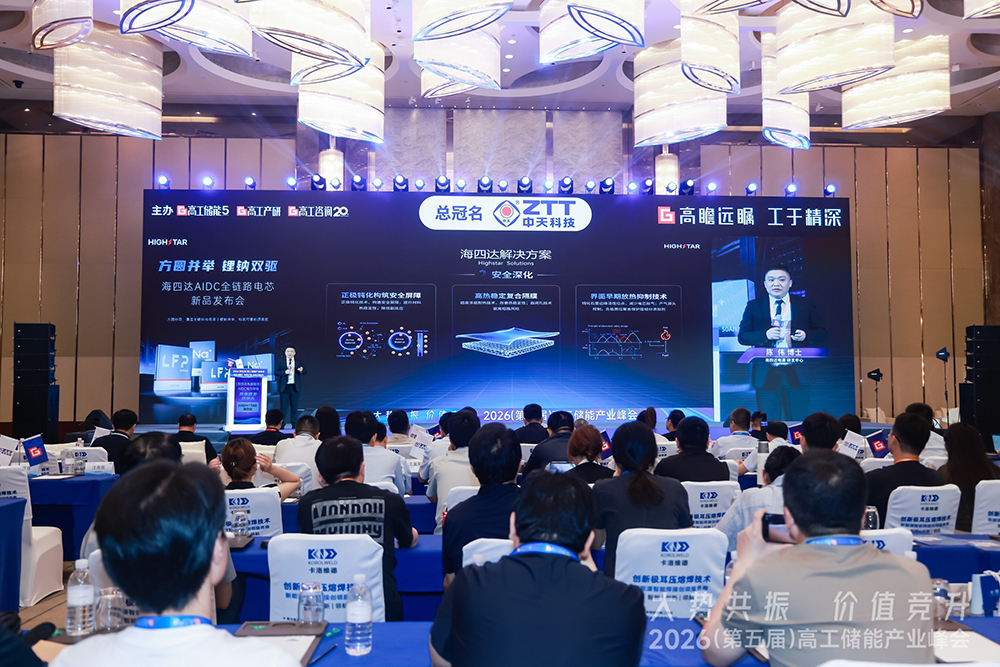
Highstar has introduced a full-chain battery cell portfolio aimed at AI data centers, spanning UPS and high-voltage direct current (HVDC) systems in the data hall “grey space,” rack-adjacent battery backup units (BBUs) in “white space,” and grid-side energy storage.
The grey-space lineup includes an 85 Ah high-rate lithium iron phosphate (LFP) cell intended for UPS and HVDC systems that need to deliver high power quickly and support backup under frequent pulse conditions. Highstar also highlighted a 50 Ah sodium-ion cell positioned for operation across a -40°C to 80°C temperature range.
For white-space BBU applications, Highstar’s portfolio includes tabless cylindrical cells in 18650 and 21700 formats. The company lists both LFP and high-nickel NMC chemistries in those form factors, and describes the cells as targeting high instantaneous power, low internal resistance, reduced temperature rise, and enhanced safety while fitting different rack-space, power, and cost constraints.
On the grid side, Highstar described a system using 314 Ah lithium-ion cells and 160 Ah sodium-ion cells. The company frames that mix as balancing long-duration energy storage, cycle life, and rapid power support, extending the portfolio from rack-level protection through upstream storage.
For data center engineers, the practical takeaway is that Highstar is trying to cover multiple battery duty cycles with a single vendor portfolio: short-duration, high-power discharge behavior for UPS/HVDC; high peak power with tight thermal limits for BBUs near IT loads; and larger-format cells for grid-side storage. But the real integration work still lives in the system design details—BMS behavior, fault handling, thermal design, and the way pulse loads and recharge profiles impact degradation.
Highstar also said the portfolio combines lithium-ion and sodium-ion chemistries across prismatic and cylindrical platforms, and that its development work includes cathode, anode, electrolyte, and separator design. Structural features described include tabless current collection, precision pressure relief, and directional venting. The company said the “full-chain” approach is intended to reduce selection and integration complexity for power equipment suppliers, system integrators, and data center operators, while providing a common foundation for joint validation across AI data center power architectures.
Source: Highstar