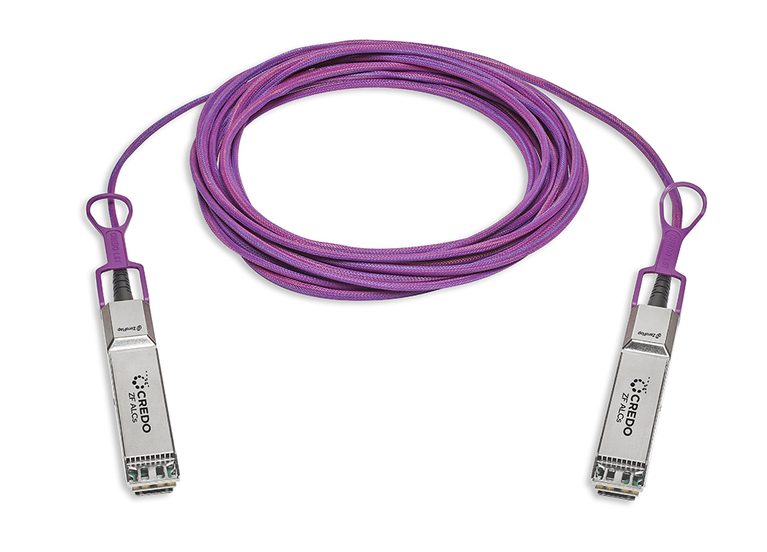


FS has rolled out two D5110-based data center interconnect (DCI) solutions aimed at speeding up point-to-point optical deployment and automating configuration for links up to 120 km. The company is targeting DWDM builds that have gotten more complex as data center traffic grows, with more devices in the architecture, denser cabling, and longer provisioning cycles.
Both solutions sit in FS’s D5110 Series and use an integrated open line system architecture with Zero Touch Provisioning (ZTP) and “intelligent auto-tuning,” with the goal of getting service activation down to minutes. FS says the systems are intended to feel operationally closer to deploying a passive multiplexer, but with the control and visibility of an active optical platform.
Physically, FS is pushing integration density: the D5110 approach combines multiple functional modules into a 1U system. FS says that reduces internal fiber connections by up to 90% and saves up to 70% rack space. For data center operators, that’s a practical win if it holds up in the field—less patching inside the chassis and less rack real estate consumed by DCI gear both translate into faster installs and fewer places for mistakes.
The first configuration is a 100G point-to-point DCI solution based on the D5110-M04EC-E-ZR+ platform with a 4/8-channel architecture. FS describes it as a 1U dual-fiber design supporting 100G client services, with line capacity up to 400G/800G over distances of up to 120 km.
The second is a DWDM multiplexing DCI solution based on the D5110-M40C4-ZR+ platform with a 40-channel architecture. It supports 1–10G NRZ and coherent services from 1G to 400G, and FS rates it for up to 16T single-fiber capacity. FS points to AI cluster interconnects, large-scale data center networks, and metro capacity expansion as target use cases.
Management-wise, FS lists unified control via WebGUI and its AmpCon management software, alongside the ZTP-based “plug-and-play” deployment flow. FS also says the D5110 Series roadmap includes support for single-channel 400G client-side services and integrated single-fiber bidirectional solutions in future releases.
Source: FS