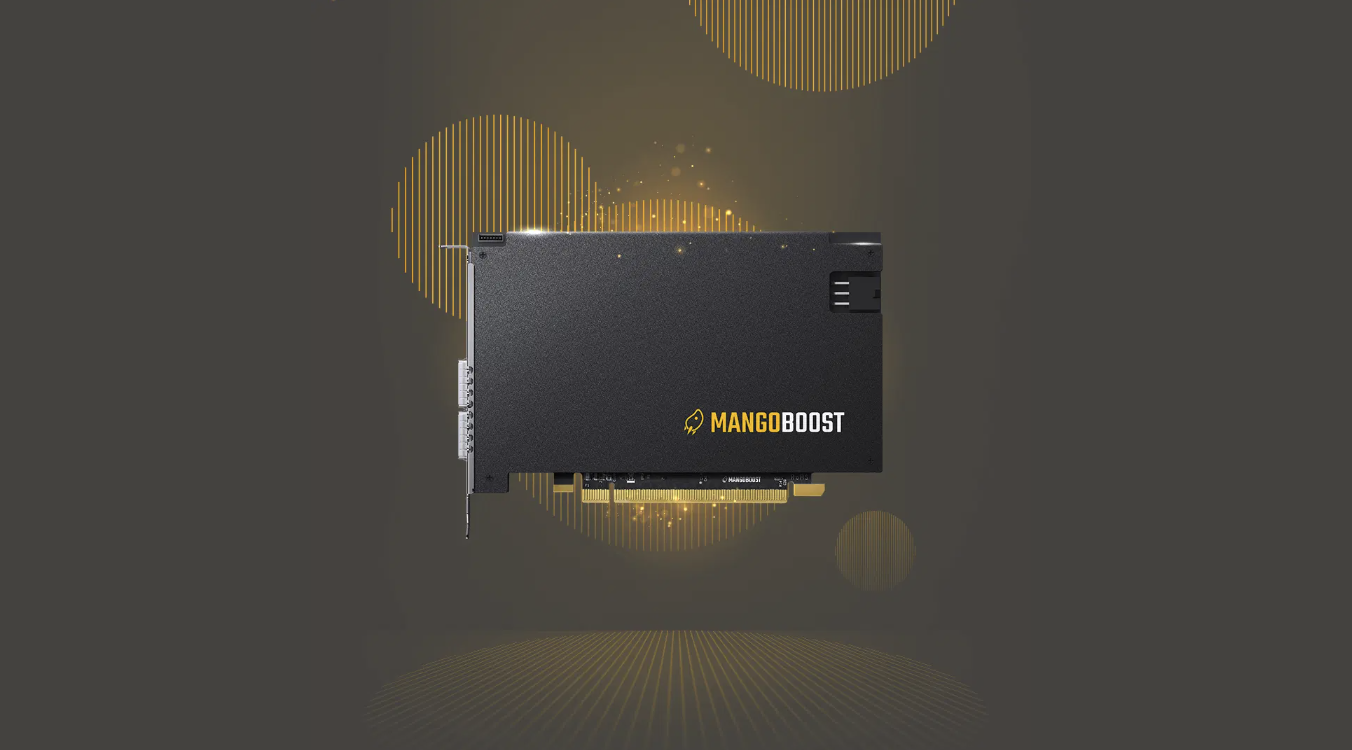
The company’s test configuration used Mango StorageBoost NVMe/TCP Initiator (NTI) on host servers and Target (NTT) on storage servers, both connected via a 400 gigabit Ethernet fabric. In MLPerf Storage v2.0’s Fabric-attached Block Storage category, MangoBoost claims it achieved line-rate throughput, providing near-local SSD performance for workloads such as 3D-UNet on NVIDIA A100 and H100 graphics processing units (GPUs).
Technical results reported by MangoBoost include six-point-two times GPU scalability for 3D-UNet on A100 GPUs compared to alternatives, and from one-point-two-five to seven-point-five times scalability on H100 GPUs. Throughput gains of one-point-five-seven times per 400 gigabit bandwidth on A100 and up to two-point-zero-five times on H100 were recorded. According to MangoBoost, its solution outperformed local Solidigm D7-PS1030 SSD drives and delivered better performance-to-cost against NVIDIA’s BlueField-3 data processing unit (DPU), claiming significantly reduced total cost of ownership (TCO).
The Mango StorageBoost architecture is based on three components:
- NVMe/TCP Initiator (NTI), which offloads the NVMe/TCP stack to hardware for full-duplex, line-rate performance without CPU consumption.
- NVMe/TCP Target (NTT), which accelerates TCP/IP and NVMe-over-Fabrics processing, enabling storage disaggregation over standard Ethernet with zero CPU participation.
- GPU Storage Boost (GSB), enabling direct direct memory access (DMA) transfers from GPU memory to local or remote storage while bypassing the CPU, which MangoBoost says improves input/output efficiency.
Mango StorageBoost integrates with standard server platforms and GPUs, does not require changes to existing hardware or software stacks, and is available for data center deployment.
Source: MangoBoost