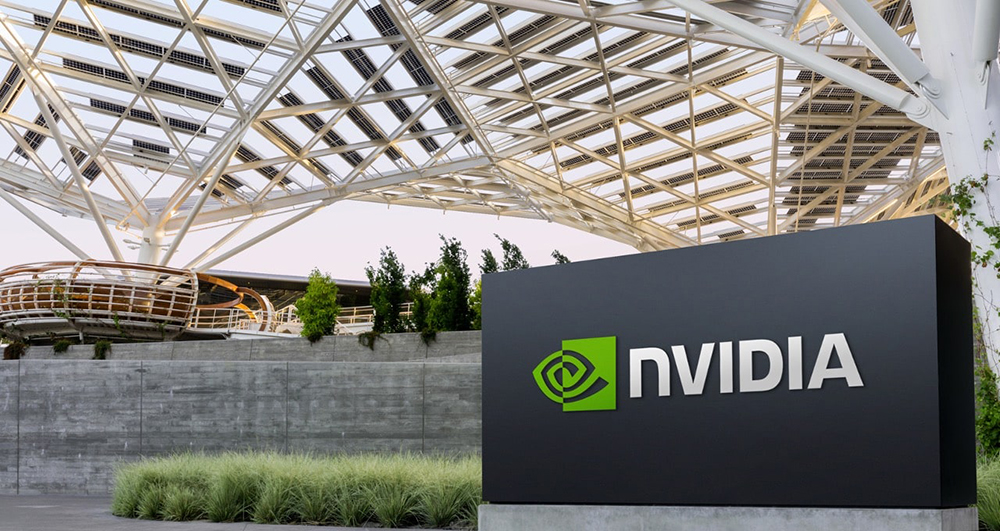
NVIDIA has announced it will participate as a private industry partner in the US Department of Energy’s Genesis Mission, an initiative stemming from an Executive Order aimed at advancing artificial intelligence (AI) leadership in energy, scientific research, and national security. As part of this partnership, NVIDIA reports it will help integrate a discovery platform to connect government, industry, and academia.
The Department of Energy (DOE) expects the Genesis Mission to significantly increase the productivity and impact of US science and engineering by driving breakthroughs in energy, accelerating scientific discovery, and enhancing national security. Current collaborations between NVIDIA and the DOE are already producing results in several technical disciplines:
- Open AI science models, including the NVIDIA Apollo family, for advances in weather forecasting, computational fluid dynamics, and structural mechanics
- AI tools aimed at optimizing manufacturing and supply chain operations
- Robotics, edge AI, and autonomous laboratories through high-fidelity simulation and AI-powered digital twins
- Research in both fission and fusion for nuclear energy applications
- Quantum computing research that leverages supercomputers and AI for new algorithm discovery
- Applications in biology, materials science, synthetic design for healthcare, and breakthroughs in critical materials
NVIDIA has also signed a memorandum of understanding (MOU) with the DOE to formalize areas of collaboration. According to the announcement, the MOU addresses joint priorities such as AI for manufacturing, open-source AI, nuclear energy, robotics, digital twins, fusion energy, quantum computing, and broader scientific applications. The partners intend to use advanced AI, robotics, and high-performance computing to accelerate the Department’s mission, focusing on AI-driven design, operation, and control of complex systems like nuclear reactors, digital infrastructure twins, and autonomous labs with edge decision-making.
The MOU outlines additional collaborative opportunities including quantum computing breakthroughs, advancements in materials science and biology, synthetic design, exploration of subsurface and geothermal resources, environmental cleanup, and the development of “co-scientist” AI systems intended to accelerate algorithm and code generation for advanced scientific workloads.
This partnership builds on recent efforts announced at the NVIDIA GTC Washington DC conference, including NVIDIA’s collaboration with Oracle to construct the DOE’s largest scientific research supercomputer at Argonne National Laboratory. NVIDIA also reports it will support seven new high-performance computing systems across Argonne and Los Alamos National Laboratories, furthering the DOE’s push for technological leadership.
Source: NVIDIA