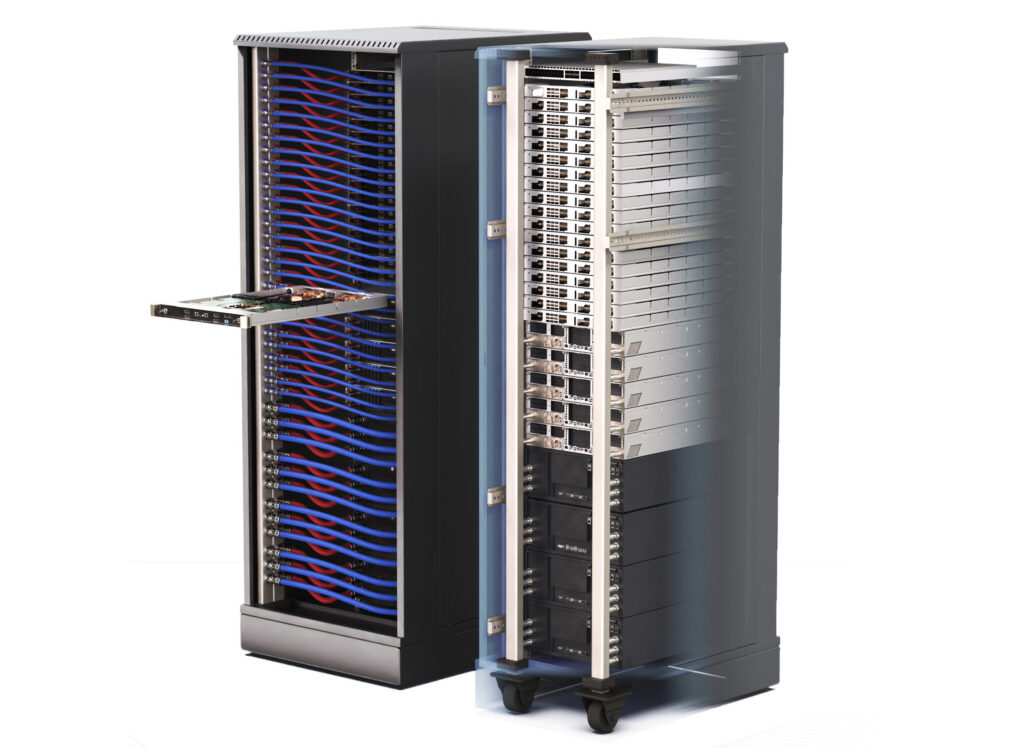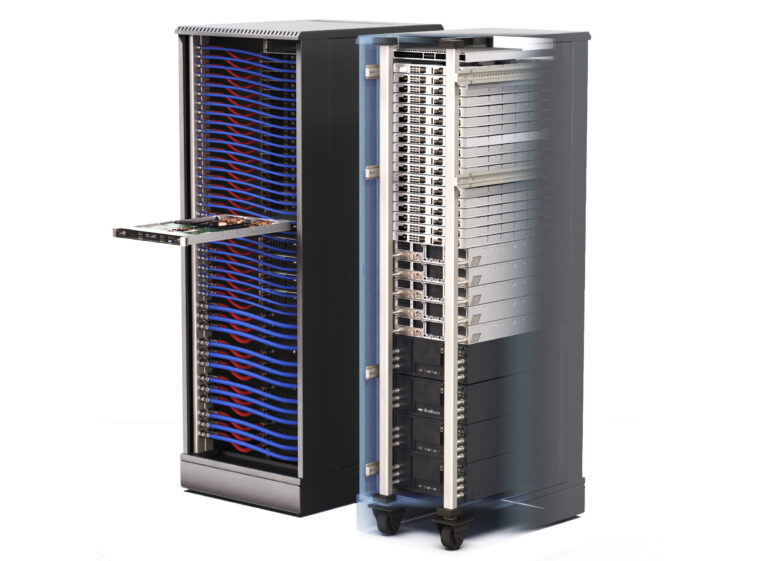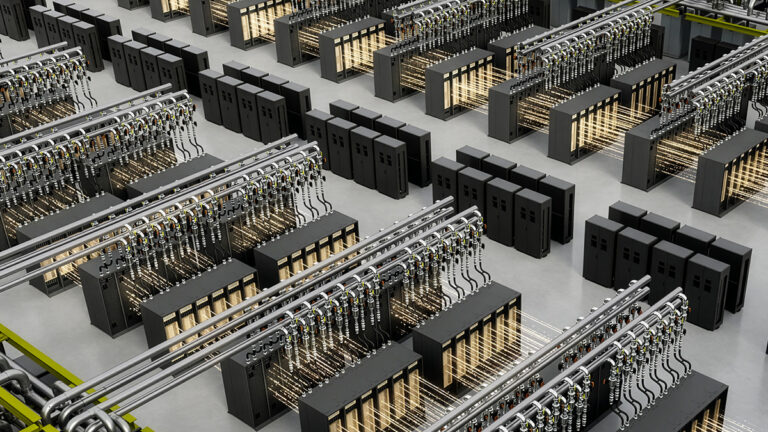

Telescent has introduced a high-density robotic cross-connect system aimed at DR4 and DR8 parallel-optics interconnects in AI GPU training clusters, positioning it as an Optical Circuit Switch (OCS) and automated fiber patch-panel option for large-scale GPU fabrics. The company says the system is designed to help operators automate turn-up and reconfiguration of fiber paths as cluster fiber counts grow, with the goal of reducing manual patching errors, downtime, and operational overhead.
According to Telescent, the new offering extends its G5 robotic platform to support the high fiber counts typical of AI cluster topologies. The company frames the product around operational needs in GPU clusters that use DR4 transceivers and other parallel optics approaches, where the number of fiber connections can scale dramatically. Telescent claims the robotic cross-connect can manage “hundreds of thousands” of fiber connections in large-scale GPU fabrics, enabling automated reconfiguration and physical-layer changes without manual patching.
For data center engineers, the core idea is physical-layer automation for parallel optics links: instead of dispatching technicians to repatch high-count fiber fields during cluster builds, expansions, or topology changes, Telescent is pitching a robotic, software-controlled approach. In dense GPU environments, manual fiber work is slow and error-prone, and the company is explicitly tying this system to avoiding patching mistakes that can trigger outages during production AI runs.
“The bandwidth requirements of AI infrastructure are rewriting the rules of data center fiber management. A single AI cluster can require hundreds of thousands of fiber connections, and the move to parallel optics architectures like DR4 multiplies that count significantly,” said Anthony Kewitsch, CEO and Founder of Telescent. “Our new high-density robotic cross-connect system gives operators a powerful automated solution to manage this complexity to ensure maximum GPU utilization and operational efficiency while future-proofing the physical layer for the next wave of AI innovation.”
Source: Telescent