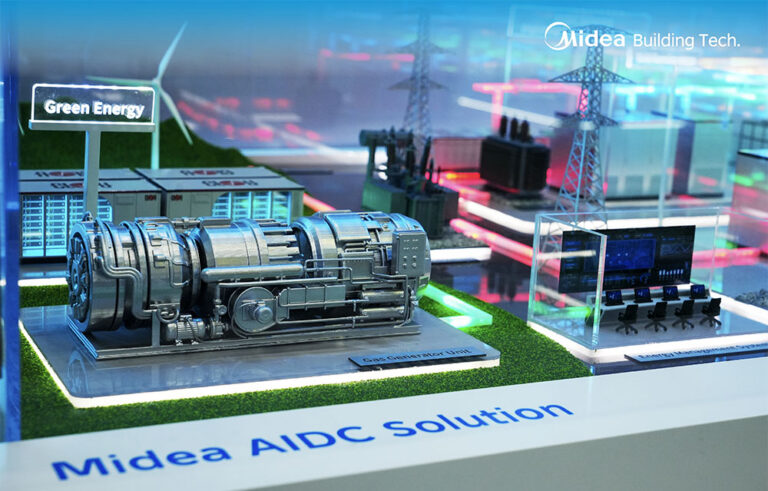

Midea Building Technologies brought a set of AI data center cooling products and a power-cooling “hyperconverged” architecture to Data Center World Asia 2026 in Singapore, targeting high-density AI racks, liquid cooling deployments, tropical climates, and lower-carbon operation.
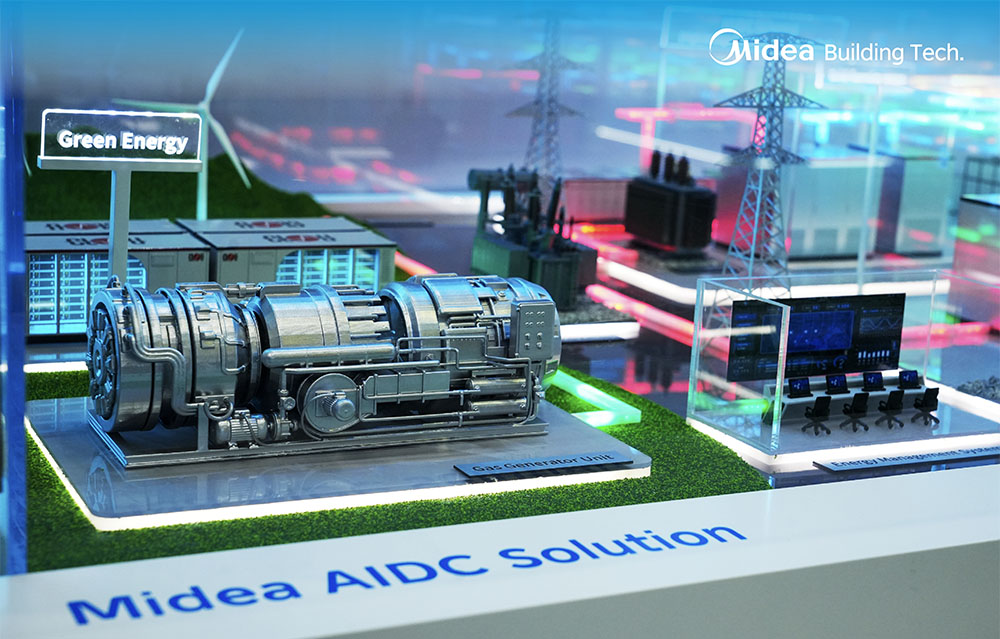
The company’s “power-cooling hyperconverged architecture” combines power systems, energy storage, magnetic bearing cooling sources, and liquid cooling CDUs into a single infrastructure stack. MBT describes it as connecting “power supply—energy storage—cooling—liquid cooling distribution” from early-stage data center construction, with an aim of tighter coordination between electrical and thermal systems as rack power density rises. MBT also published a technical white paper tied to the architecture that covers planning, construction, and operations for AI data centers.
For data center engineers, the practical point is integration: when power delivery, energy storage behavior, and cooling plant control are designed as one system, it can be easier to avoid mismatches that show up during commissioning and early operations, especially in high-density halls where load ramps can be fast and cooling control loops get stressed. But MBT’s efficiency claims will depend heavily on operating envelope, controls, and how much “free cooling” a given site can actually sustain.
Cooling products highlighted for AI data centers
MBT framed its “full-stack” AI data center cooling approach as linking cooling source, cooling distribution, and terminal heat dissipation. It highlighted three products as key building blocks for deployments:
Magnetic CDU: MBT’s magnetic CDU integrates a magnetic bearing cooling source with a distribution unit, aiming to replace a separated “chiller + passive CDU” setup. MBT states it can reduce equipment footprint by up to 70%, shorten deployment cycles, and support PUE below 1.2 under suitable operating conditions.
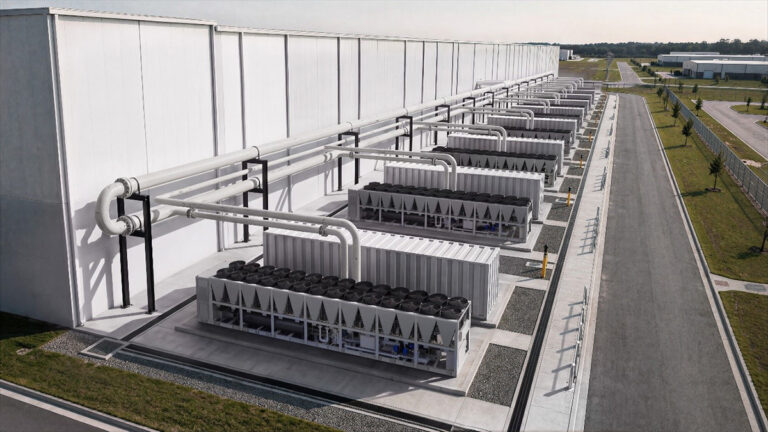
Air-cooled magnetic centrifugal chiller: Positioned for hot, water-scarce environments, MBT states it can deliver a COP of up to 5.4 while reducing dependence on cooling water.
Industrial-grade CDU: Specified at 2.6 MW cooling capacity at a 3 K temperature difference, with “high-availability support,” aimed at large AI clusters and high-density racks.
Keppel collaboration and a reference site
MBT also pointed to a collaboration with Keppel spanning green data center infrastructure “from design to delivery and operation.” As an example, the Gui’an Midea Cloud Data Center in China combines MBT hardware with Keppel’s digital platform, which MBT says enables up to 7,654 hours of annual free cooling and a stable PUE below 1.2.
Source: Midea Building Technologies