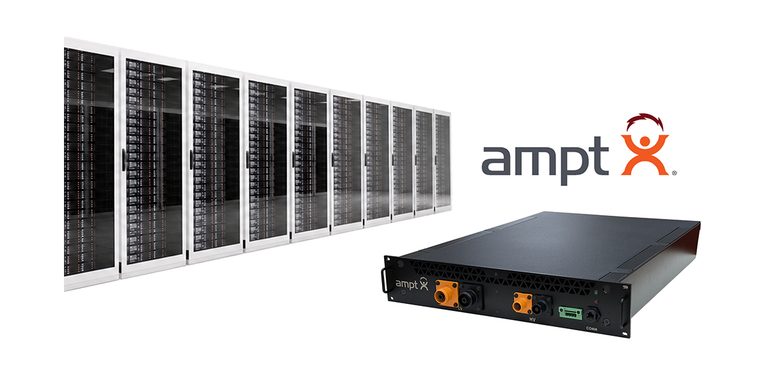

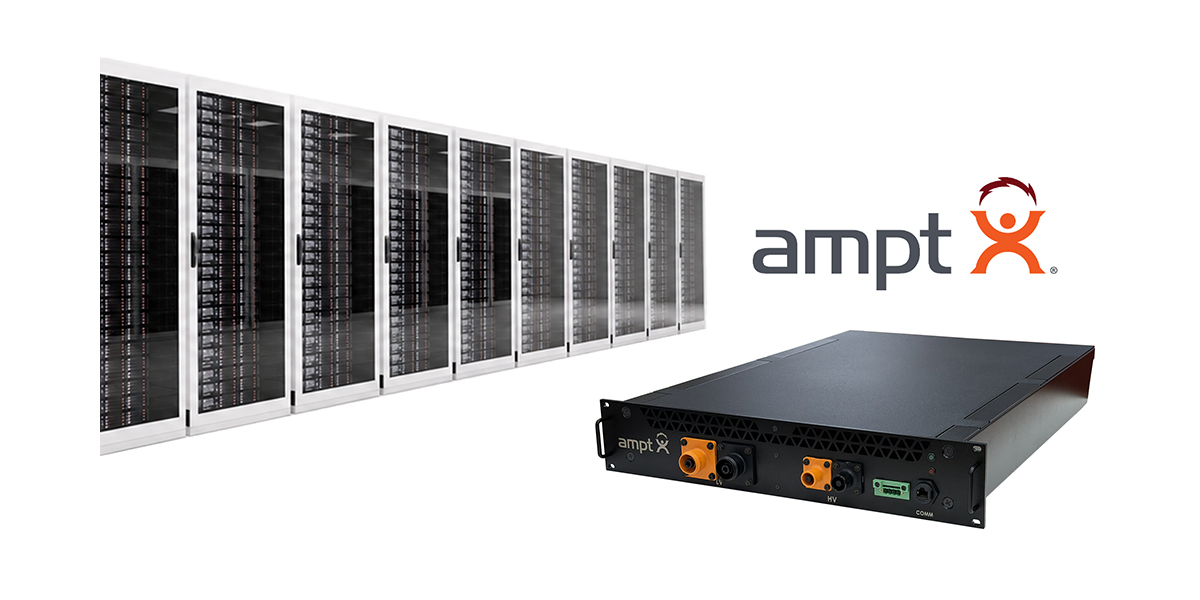
Ampt has introduced a Battery Converter aimed at 800 VDC AI data center power architectures, using battery storage on a shared DC bus to smooth fast GPU load swings. The company says the converter’s active power conditioning responds to load changes in less than 1 millisecond, with the goal of letting operators run more compute on the same grid interconnect by sizing upstream capacity closer to average load instead of peak.
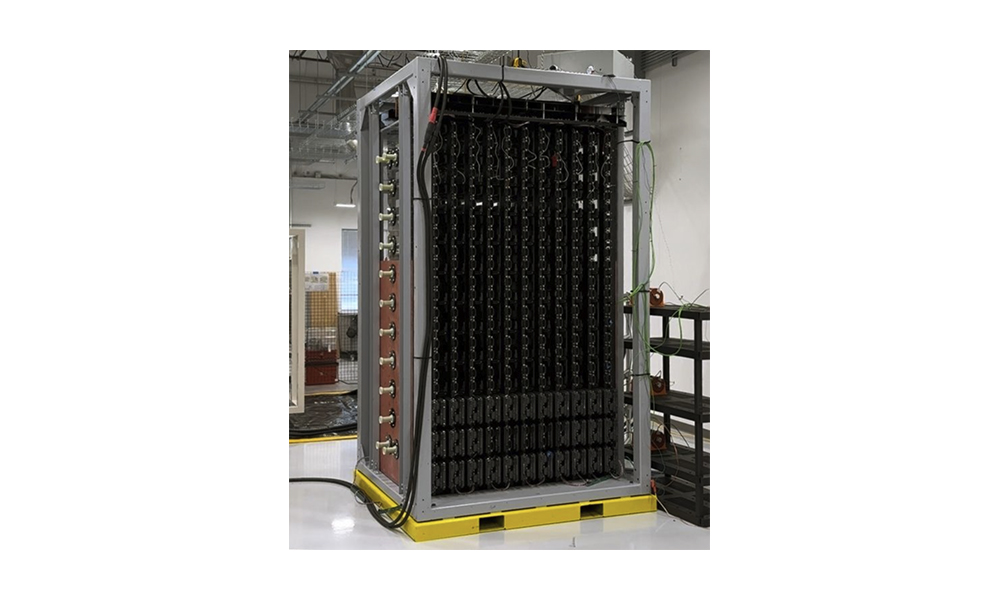
Each Battery Converter is a 2U, rack-mountable 80 kW unit rated at 100 A. Ampt says units can be paralleled from a single rack up to a full row or an entire GPU cluster, using the same building block as power scales. The converter supplies a regulated 800 VDC output from a DC bus shared by battery storage and grid or on-site power.
Ampt’s architecture places the grid connection, battery storage, and any on-site generation on a common DC bus. In the described setup, the grid ties into the DC bus through a medium-voltage transformer and a power conversion system, and the batteries operate up to 1500 VDC. When GPU power demand changes, Ampt says the converter reacts in under 1 millisecond so the battery can supply or absorb the difference while the grid-facing demand remains steadier.
For data center engineers, the basic idea is straightforward: if short-duration peaks are covered by storage, you can reduce how much headroom you carry in upstream electrical infrastructure that’s otherwise built for worst-case transients. That’s attractive in AI deployments where rack power can be highly dynamic, and where interconnect and electrical gear sizing decisions can bottleneck expansion.
On efficiency, Ampt states the Battery Converter reaches up to 99.2% peak efficiency. The company also points to a DC-coupled approach that keeps stored energy in DC, rather than converting DC-to-AC-to-DC. In the same design, the DC bus runs at 1100 to 1500 VDC (depending on battery state of charge), while the converter outputs a stable 800 VDC to the GPU racks. Higher distribution voltage at the same power reduces current, which reduces conductor losses or enables smaller conductors.
Ampt also says adding one converter provides N+1 redundancy, maintaining full power if a unit goes offline. Sites with existing or planned solar can connect PV systems to the same battery DC bus through Ampt String Optimizers, with no additional inverter or transformer.
“In AI factories, GPU loads swing in milliseconds, so storage has to work every minute of the day. With the Ampt Battery Converter, the same battery gives the grid a steady load and the GPUs the fast-responding power they need,” said Aaron Gomolak, CEO of Ampt.
The Battery Converter is currently in partner pilots for data centers, with general availability planned for Q3 2027. More information is available on Ampt’s website.
Source: Ampt