
Chemours has introduced its Faizeon two-phase liquid cooling solutions, a portfolio of dielectric fluids designed for AI, HPC, and high-density data centers. The lineup targets both two-phase direct-to-chip and two-phase immersion cooling, aiming to expand the cooling options available as chip power and rack densities climb.
The core mechanism is phase change: the working fluid absorbs heat and boils from liquid to vapor, which can improve heat removal compared to single-phase loops. Chemours says independent third-party testing of a two-phase direct-to-chip system using Faizeon 200 fluid kept a GPU up to 19° C cooler than a single-phase, water-based fluid, while operating at a lower coolant flow rate.
For data center operators, the practical appeal of two-phase approaches is heat flux handling: as GPUs and accelerators push higher power, the temperature headroom and pumping overhead of single-phase systems can become limiting factors. But moving to two-phase brings its own engineering tradeoffs, including pressure management, material compatibility, and the need for hardware designed around boiling and condensation behavior, rather than just bulk liquid temperature rise.
Chemours’ Faizeon lineup includes four two-phase direct-to-chip fluids and one two-phase immersion fluid:
Faizeon 100 is described as a low-pressure two-phase direct-to-chip fluid aimed at deployments where operating pressure, materials compatibility, and infrastructure constraints are central. Faizeon 110 is also a low-pressure two-phase direct-to-chip fluid, with an intermediate boiling point and zero ozone depletion potential. Faizeon 200 is a two-phase direct-to-chip fluid for medium-pressure systems. Faizeon 220 is positioned as Chemours’ highest-performance two-phase direct-to-chip fluid, targeted at applications where rapid heat removal is critical, including high-density GPU environments, AI clusters, and HPC.
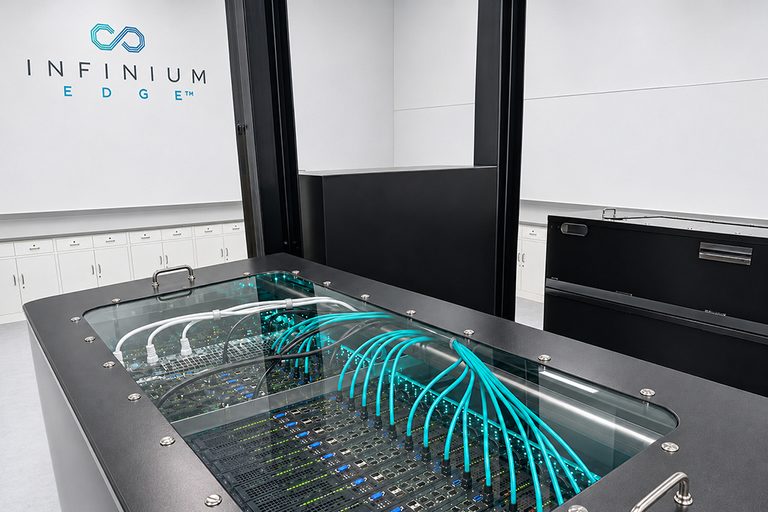
For immersion, Faizeon 500 is a two-phase immersion cooling fluid for full-server immersion and was previously sold as Opteon 2P50 dielectric fluid. Chemours lists dielectric properties, full-server heat capture, support for ultra-high-density AI deployments, and waste heat recovery potential as design goals for the fluid.
“AI’s rapid growth is increasing the demands on data center infrastructure, and cooling is becoming a critical constraint,” said Denise Dignam, President and CEO at Chemours.
Chemours also named ecosystem engagements tied to advancing two-phase liquid cooling adoption, including work involving the US Department of Energy’s Oak Ridge National Laboratory (ORNL), NTT DATA, 2CRSi, DataVolt, Munters, Accelsius, and ZutaCore.
Source: Chemours