
VAST Data has announced that several major Canadian national research centers and AI institutes, including SciNet at the University of Toronto and SHARCNET at the University of Waterloo, have selected the VAST AI Operating System (AI OS) as their primary platform for data and AI workloads. This builds on earlier deployments with Canadian-based infrastructure providers using the platform to support large-scale GPU services.
SciNet, a key national high performance computing (HPC) site hosting the Trillium supercomputer with about 240,000 CPU cores and 250 GPUs, has migrated to the VAST AI OS to consolidate traditional HPC and emerging AI workloads. According to Daniel Gruner, CTO at SciNet, “With VAST, we no longer have to juggle different storage tiers or bolt on burst buffers just to keep up with demanding I/O. We can support both traditional HPC and new AI workloads on VAST’s AI OS that our users hammer every day – and it simply keeps up.”
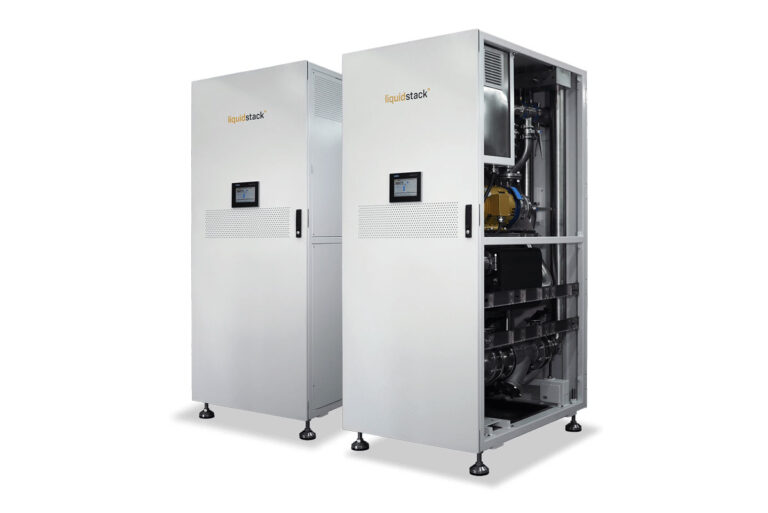
At SHARCNET, the Nibi cluster at the University of Waterloo combines over 135,000 CPU cores and 288 GPUs with advanced immersion cooling. SHARCNET’s Director of Technology, John Morton, noted, “With our previous system, a single misbehaving job could impact the entire cluster. The best thing we can say about VAST is that it has largely disappeared into the background – it has quietly absorbed billions of files and some extremely demanding workloads without ever becoming a problem we have to debug.”
VAST claims its AI OS delivers several technical advantages for data center environments:
- Unifies HPC and AI on a single platform for simulations, analytics, AI training, and inference without the need for separate storage tiers or burst buffers.
- Keeps GPUs fully utilized with its Disaggregated Shared-Everything (DASE) architecture, supporting high-performance for small-file, high-input/output operations per second (IOPS), and metadata-intensive workloads.
- Provides management, snapshot, catalog, and automated resilience functions to simplify operations for lean technical teams.
- Supports secure, multi-tenant data environments for research collaborations through a global namespace and multi-tenancy data services within the VAST DataSpace component.
- Enables multi-site and multi-cloud data foundations, supporting replication and consistent governance across national research sites and public cloud infrastructure.
Pezhman Sharifi, Director at VAST Data Canada, stated, “What unites SciNet, SHARCNET and other Canadian infrastructure partners is a shared need for an operating system that keeps GPUs and researchers fed with data without adding operational complexity. The VAST AI OS delivers a single, global platform for Canada’s innovation economy – from academic labs to production AI services.”
Source: VAST Data