LiNova Energy has launched PolyPower, a battery cell aimed at data center backup power applications and built around the company’s proprietary, metal-free polymer cathode. The company is pitching the design on two fronts that matter in data center BBUs: high-power performance and intrinsic safety at the cell level.
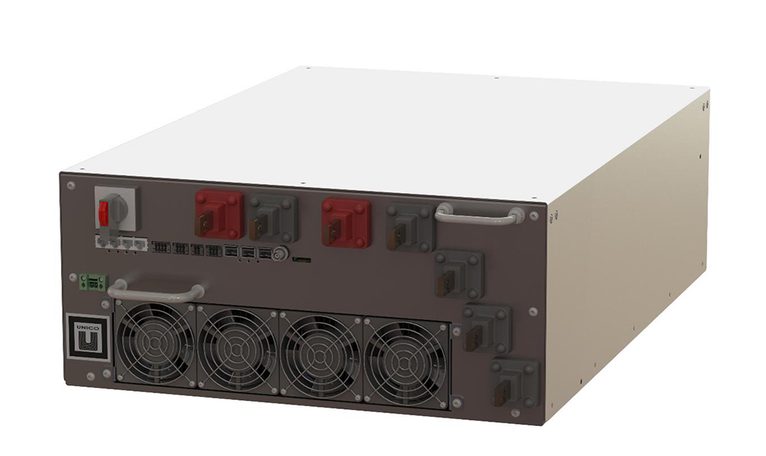
PolyPower is currently available for testing in a pouch-format cell, with a cylindrical format expected in Q3 2026. LiNova says the cells are slated to be integrated into hyperscaler-spec battery backup units (BBUs) for performance testing in Q4 2026.
Technically, PolyPower’s differentiator is its polymer cathode chemistry. LiNova describes the cathode as a metal-free active material synthesized from “mass-produced precursors” that can be sourced domestically. The company also argues this approach sidesteps supply-chain exposure tied to conventional metal cathodes, including geopolitical risk and tariff volatility.
On safety, LiNova’s central claim is “zero fire risk,” arguing the polymer cathode eliminates thermal runaway risk at the cell level because it evolves CO₂ rather than oxygen. That’s a bold statement for any lithium-based cell used inside facilities, so operators will want to see how those results translate from cell-level abuse tests to complete BBU designs with real packaging, controls, and fault modes.
LiNova also ties the cathode approach to cost. The company claims PolyPower can lower cathode costs by up to 90% versus conventional materials, and says its cost profile is competitive with or below domestic LFP even at “early production scale” of 100 MWh/year.
PolyPower was developed “in collaboration with a hyperscale data center operator” to meet next-generation BBU performance requirements. LiNova says independent third-party testing at the University of California San Diego demonstrated high-rate performance with capacity retention exceeding hyperscaler benchmarks. The company also reports in-house cycle life, rate capability, and safety testing, including nail puncture tests that resulted in “no hazard or venting” and an in-house UL9540A simulation that resulted in no thermal runaway for the PolyPower cell.
“The battery cathode is the most expensive and dangerous component in the stack, and has historically been the least reinvented,” said Mike Nagus, CEO of LiNova Energy. “With its superior performance and zero fire risk, PolyPower represents a fundamental breakthrough in battery technology for mission-critical applications.”
LiNova says PolyPower builds on its earlier energy-optimized cell (Poly-G), now branded PolyEnergy, which is targeted at high-energy applications.
LiNova Energy also points interested parties to its contact page at linovaenergy.com/contact.
Source: LiNova Energy