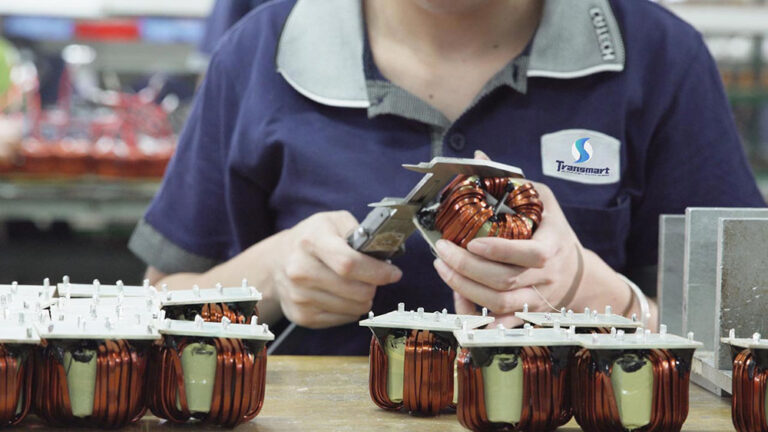

Transmart is highlighting its soft magnetic core portfolio—nanocrystalline, amorphous, and grain-oriented silicon steel—for high-frequency power conversion and filtering use cases that show up in power infrastructure and AI data center power architectures. The company also said it is placing more emphasis on serving customers in North America.
Transmart’s manufacturing setup includes two production facilities in China: one focused on silicon steel cores, current sensor cores, and instrument transformer cores, and another dedicated to nanocrystalline cores, amorphous cores, and common mode chokes. The facilities are certified to ISO 9001, ISO 14001, ISO 45001, and IATF 16949.
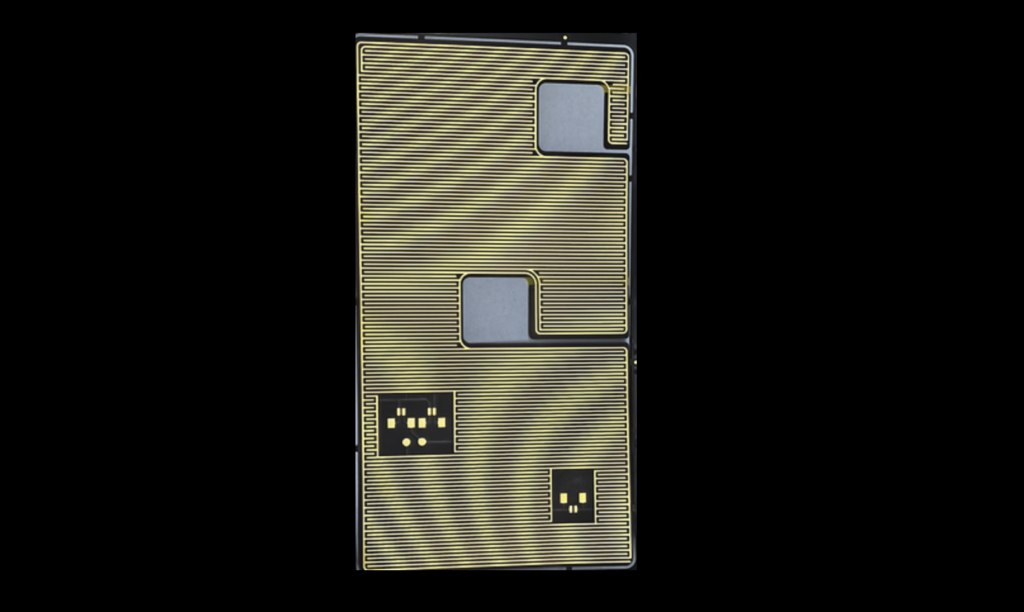
A key technical detail in the company’s nanocrystalline platform is 12–14 µm ribbon processing. Thin ribbon is used to reduce eddy-current losses at higher switching frequencies, which is one of the practical constraints engineers run into as power electronics move toward higher frequency and higher power density.
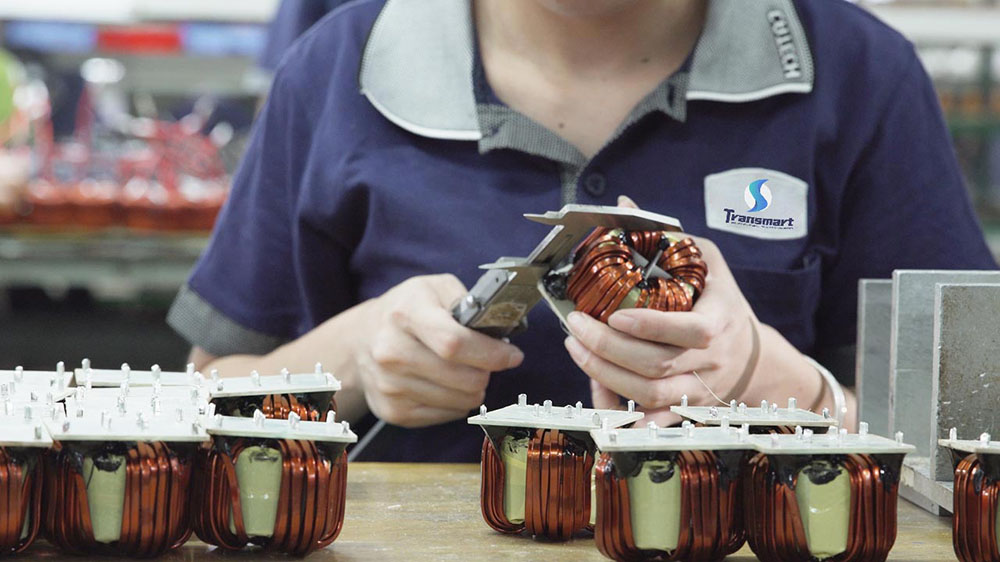
Transmart said it uses self-developed, patented production lines that include precision slitting, automatic winding, vacuum annealing, and multi-wire cutting. For nanocrystalline cut cores, the company lists core losses as low as 0.4 W/kg under 20 kHz, 50 mT test conditions. It also lists a 3000-permeability low-permeability nanocrystalline ribbon aimed at high-frequency transformer designs where controlled permeability is part of maintaining stable behavior across frequency.
Beyond nanocrystalline materials, Transmart’s amorphous core lineup covers multiple geometries, including toroidal, C-core, E-core, block, and amorphous stator core designs. The company ties amorphous cores to applications that use lower switching frequencies and are chasing energy efficiency.
On the silicon steel side, Transmart said it supplies grain-oriented material from 0.05 mm to 0.35 mm thickness, listing intermediate options including 0.10 mm, 0.18 mm, 0.20 mm, 0.23 mm, 0.27 mm, and 0.30 mm. The company also lists a range of core geometries, including toroidal, split, C-core, E-core, block, rectangular, oval, and multi-cut cores.
For data center engineers, the through-line is straightforward: as switching frequencies rise in rectification, conversion, and filtering stages, magnetic material losses and thermal behavior can become first-order design constraints, not a footnote. But “better core material” is only useful if it maps cleanly to your specific operating points—frequency, flux density, thermal limits, and mechanical packaging—and those details matter more than broad application claims.
“As power systems move toward higher frequencies and greater density, the performance of the core material becomes one of the defining factors in system design,” said Richard LONG, Director of Transmart.
Transmart also said it is tracking solid-state transformer (SST) technology, describing it as an emerging architecture that integrates power conversion and transformation functions, with limited commercial deployment today.
Source: Transmart