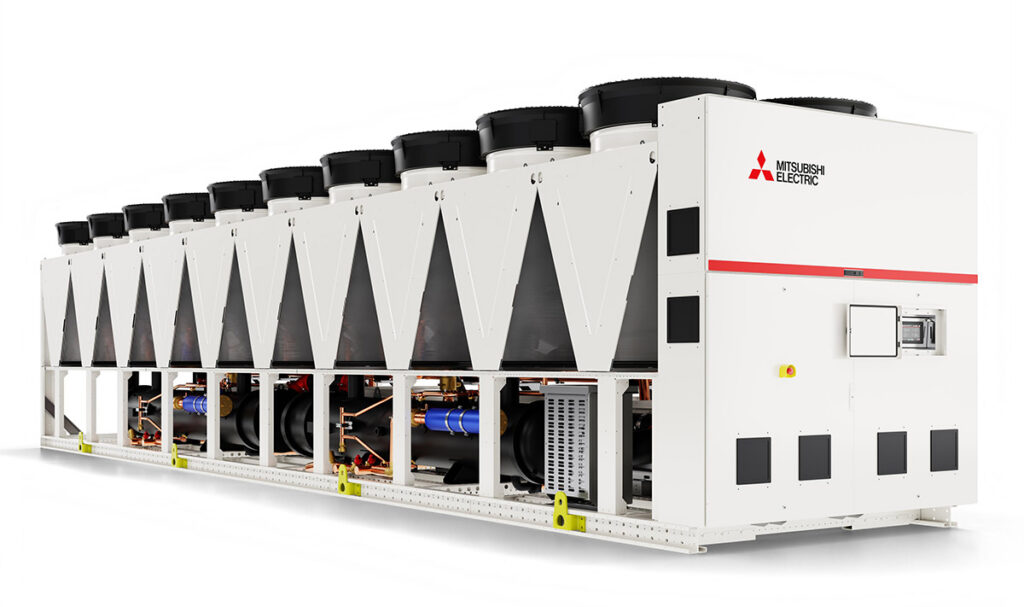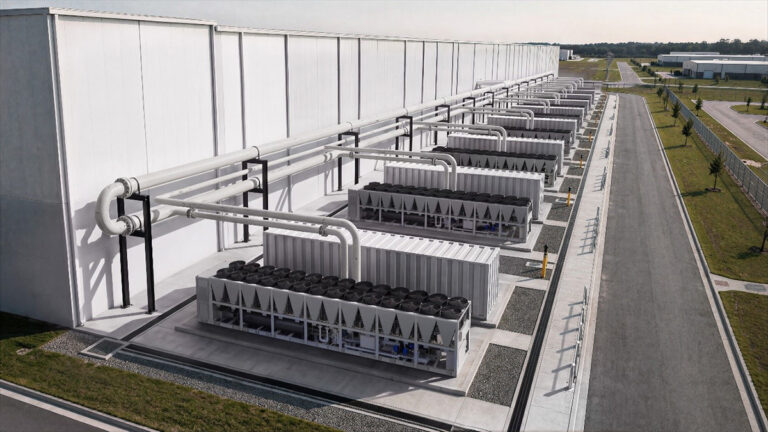


Trane Technologies has demonstrated an 800 VDC chiller architecture aimed at next-generation AI data centers, validating the approach on a modified high-efficiency chiller platform in a lab setting. The company says the proof-of-concept delivered more than 1,000 tons (3.5 MW) of cooling and showed the potential for up to a 2% system-efficiency improvement versus conventional AC-powered configurations.
Trane worked with Eaton and Danfoss to modify an existing chiller to accept an 800 VDC feed. The underlying idea is straightforward: traditional AC cooling plants typically step power through multiple conversions to run compressor drives, pumps, and fans. Trane says taking in 800 VDC directly reduces conversion losses, improving overall system efficiency.
For data center operators trying to claw back every non-IT watt, even small improvements at the central plant can matter. Trane ties the claimed efficiency gain to incremental compute headroom, arguing that in a 200 MW data center it could “unlock up to 1.8 MW of additional compute capacity,” which it equates to “up to fifteen 120 kW racks” or “up to three 600 kW racks.” Those are directional figures, but they put a concrete frame around why DC distribution is getting renewed attention as AI facilities scale.
“As AI workloads push data center power densities to higher levels, optimizing every link in the energy chain is vital,” said Mauro J. Atalla, senior vice president and chief technology and sustainability officer at Trane Technologies. “By eliminating conversion losses and designing for higher DC voltage architectures, we are helping data center operators reduce the power needed by non-IT equipment and maximize compute capacity per megawatt.”
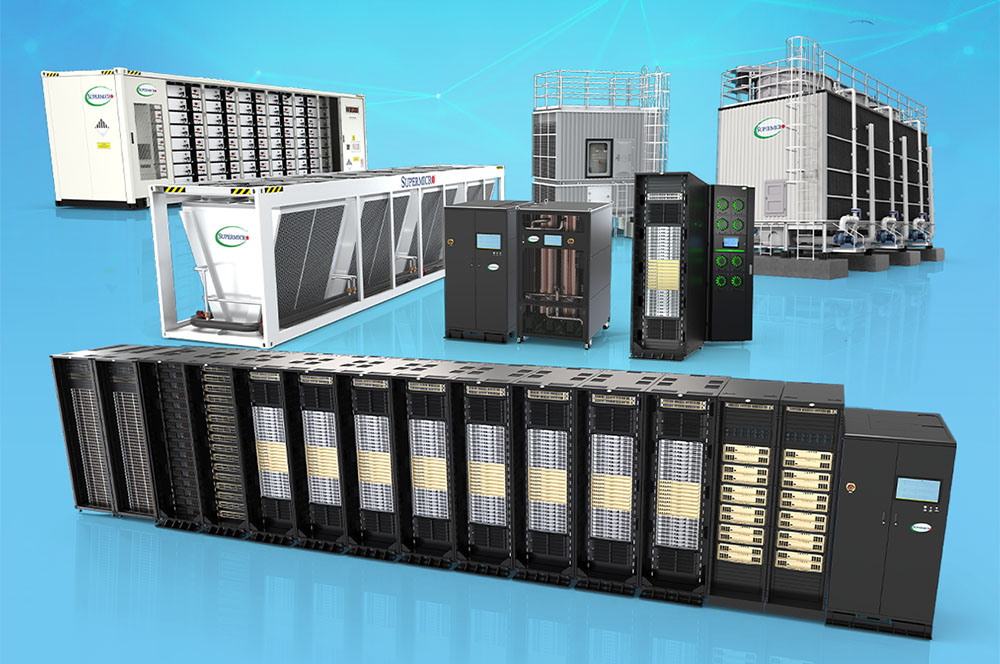
Trane says the 800 VDC work is intended to be broadly applicable across thermal management technologies, with a longer-term goal of moving toward fully DC-powered mechanical cooling infrastructure and integrated chiller plants. Separately, the company highlighted a portfolio that includes high-capacity air- and water-cooled chillers, modular and liquid cooling infrastructure, Coolant Distribution Units (CDUs), CRAHs, fan coil walls, digital twin architectures, automated chiller plant controls, and reference designs.
Trane Technologies did not describe commercialization timing for the 800 VDC chiller architecture, framing the work as a successful laboratory demonstration and proof-of-concept.
Source: Trane Technologies