
Adtran has extended its edge routing portfolio with new Terabit-class edge routers that include 400 Gbit/s interfaces, targeting higher-capacity aggregation closer to access networks and mobile backhaul sites. The company is positioning the platforms as compact, cabinet-ready options intended to scale edge capacity without adding space, power, or operational overhead compared with larger, traditional router platforms.
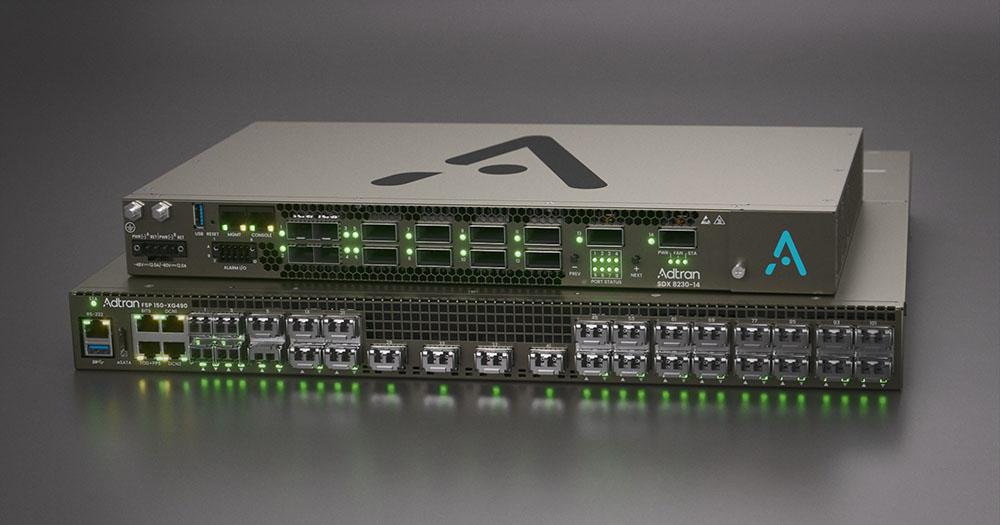
The announcement centers on high-capacity edge routers built on the FSP 150 and SDX 8000 product series. Adtran says the platforms support high-density aggregation from 10 Gbit/s to 400 Gbit/s in compact form factors for edge and regional aggregation. In the lineup, the SDX 8230 is described as purpose-built for temperature-hardened cabinet installations, while the FSP 150-XG490 targets higher-density environments. Adtran frames the goal as making 400 Gbit/s aggregation practical at the edge “without paying core-router economics for edge use cases.”
Adtran also highlights a unified software foundation across the portfolio, stating the routers are powered by Adtran’s network operating system to support automation, simplified provisioning, and consistent operations as the portfolio evolves. For engineering teams, the key claim is operational consistency across devices while moving beyond 100 Gbit/s interfaces that Adtran notes are now widely deployed across fiber access, aggregation, and mobile backhaul.
On the optical side, Adtran says its Terabit-scale edge routers can integrate with the company’s FSP 3000 IP OLS and ZR/ZR+ coherent optics to extend 400 Gbit/s packet-based edge transport beyond native reach in supported configurations. Adtran’s stated intent is to simplify network design and reduce the need for standalone transponders by combining edge routing and optical transport, with unified control and automation delivered through Adtran’s automation and orchestration tools. The company also calls out support for “advanced routing services at the edge,” including MPLS, segment routing, EVPN, and IPVPN, within what it describes as a disaggregated architecture.
“Operators are being asked to deliver more bandwidth and support faster deployment timelines, all while managing rising operational complexity and keeping costs under tight control,” said Christoph Glingener, CTO of Adtran. “Our Terabit edge routers let them scale intelligently, by simplifying deployments, stripping out unnecessary hardware and reducing dependence on proprietary architectures, while maintaining consistent operations as the network grows.”
Andy Ruble, GM of access and aggregation at Adtran, emphasized cabinet and central-office deployments, saying the approach “make[s] it possible to roll out high-capacity routing in tight cabinet and central-office environments while stripping out surplus equipment.” Adtran linked to a video for additional information on the Terabit-class edge routers.
Source: Adtran