
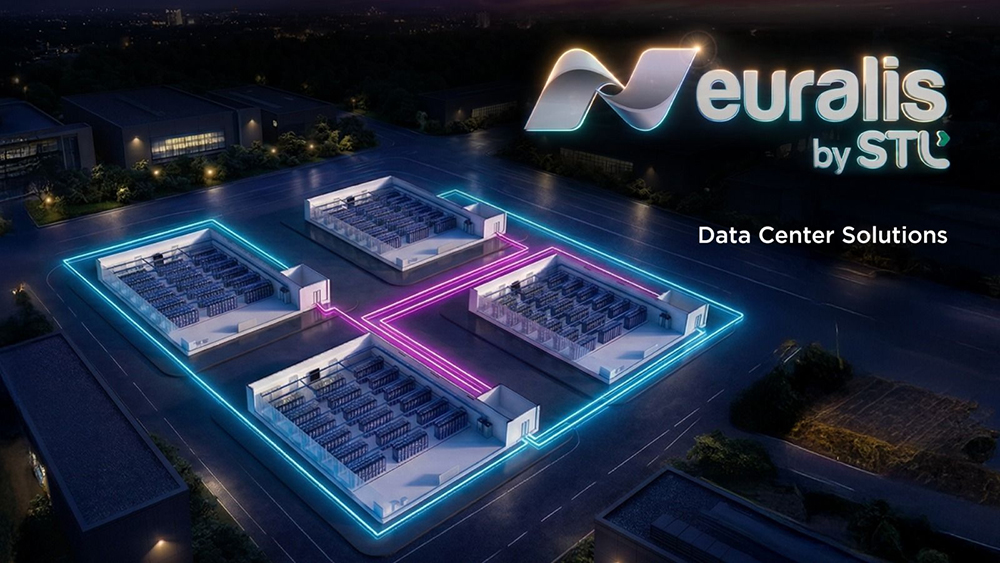
STL Optical Connectivity NA (STLOC), a US subsidiary of STL, has launched its Neuralis data center connectivity portfolio in the US. The company introduced the STL Neuralis suite at Data Center World 2026 in Washington, D.C.
The portfolio targets connectivity needs in AI-focused facilities, where GPU clusters drive higher fiber counts and heavier east-west traffic inside the data center. STL frames Neuralis as a set of integrated connectivity building blocks aimed at density, space constraints, and deployment speed for data center builders and operators.
Neuralis is organized into two categories. The first, “Maximizing the AI Whitespace,” centers on ultra-high-density cabling using MMC and MPO connectivity to support large fiber counts. STL says it can shift terminations to the factory with pre-terminated assemblies, a move intended to reduce onsite labor risk and compress deployment timelines.
The second category is high-speed data center interconnect (DCI) infrastructure intended for the data center campus edge. STL’s flagship product line in this area is the Celesta IBR series, which the company describes as ultra-compact cables with up to 6,912 rollable ribbon fibers. STL lists availability in SM A2 fiber with 8F, 12F, and 16F ribbon options, and says the design is intended to handle the thermal and safety demands associated with AI deployments.
Neuralis also ties to STL’s vertically integrated manufacturing chain for connectorized fiber infrastructure, spanning “Ultra-Pure Preform” (creating glass preform from silica), fiber drawing, advanced cabling (including Celesta IBR integration), and connectorization for tested, plug-and-play pre-terminated assemblies and related connectivity hardware. For data center operators, that factory-centric approach matters because termination quality, repeatability, and packaging density can directly affect both install schedules and day-two serviceability, especially as fiber counts scale up.
“AI demands a level of precision and density that traditional cabling simply cannot meet,” said Ankit Agarwal, Managing Director, STL. “With STL Neuralis, we are providing the high-speed, low-latency foundation that allows GPU clusters to perform at their peak, moving complexity out of the field and into a controlled, high-precision factory environment.”
STL also pointed to manufacturing capabilities in Lugoff, South Carolina, as part of its North America effort, and described STLOC as providing design, manufacturing, and sales of connectivity products for North American data center operators, with sales and support personnel located across the US.
Source: STL