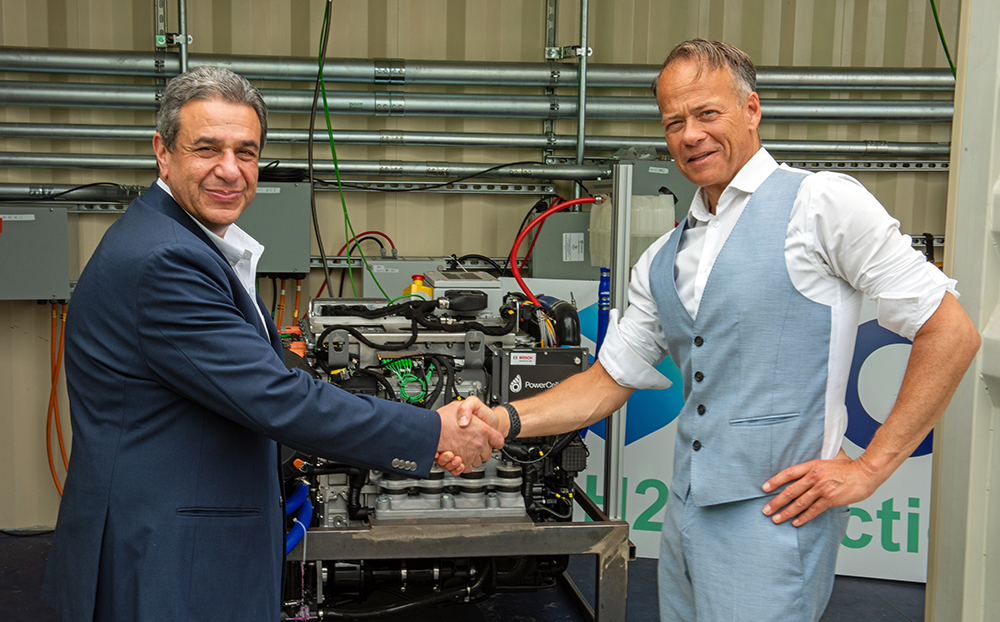
ECL and PowerCell Group have signed a deal to deploy hydrogen fuel cell power across ECL’s AI data center platform, including a firm purchase order for PowerCell PS190 fuel cell systems. Separately, the companies also signed a non-binding memorandum of understanding (MOU) that outlines a framework for roughly 300 MW of additional hydrogen fuel cell capacity as ECL expands its FlexGrid data center footprint.
The initial deployment is slated for ECL’s 35 MW CSC-1 campus in Santa Clara, California. ECL said containerized PowerCell fuel cell systems will integrate into its FlexGrid microgrid architecture alongside grid power, natural gas, and battery storage. The work builds on an existing PowerCell deployment at ECL’s MV-1 facility in Mountain View, California, where ECL said hydrogen has been used as the primary power source for more than two years.
For data center operators, the engineering challenge isn’t “can a fuel cell produce power,” it’s whether the power plant can behave like data center infrastructure: integrate cleanly with site controls, follow load, and coexist with other sources without creating operational surprises. ECL is explicitly treating hydrogen as part of a multi-source microgrid, not a standalone generator replacement, which is where most designs succeed or fail.
“We evaluated multiple fuel cell technologies under real operating conditions over two years at our MV-1 facility before selecting PowerCell and Bosch,” said Yuval Bachar, founder and CEO of ECL. “This is not a pilot or a proof of concept. We are deploying these PowerCell PS190 units with the operational data to back it up, and we are signing an MOU for an additional 300 MW because the demand from AI operators for power in constrained markets far exceeds what any single grid connection can deliver.”
PowerCell said the partnership is supported by Bosch, which it described as PowerCell’s manufacturing partner and largest shareholder, and which it said provides a manufacturing foundation to deliver at industrial scale. Bosch also provides “U.S.-based service infrastructure” to support ECL deployments, according to the companies.
On the controls side, PowerCell’s Distributed Master Controller platform will integrate with ECL’s Lightning real-time management system to manage dynamic load balancing across fuel cells, batteries, the grid, and natural gas at each FlexGrid site.
ECL said it is accepting tenant inquiries for AI infrastructure deployments in 2027–2028 via ecldc.com.
Source: PowerCell