
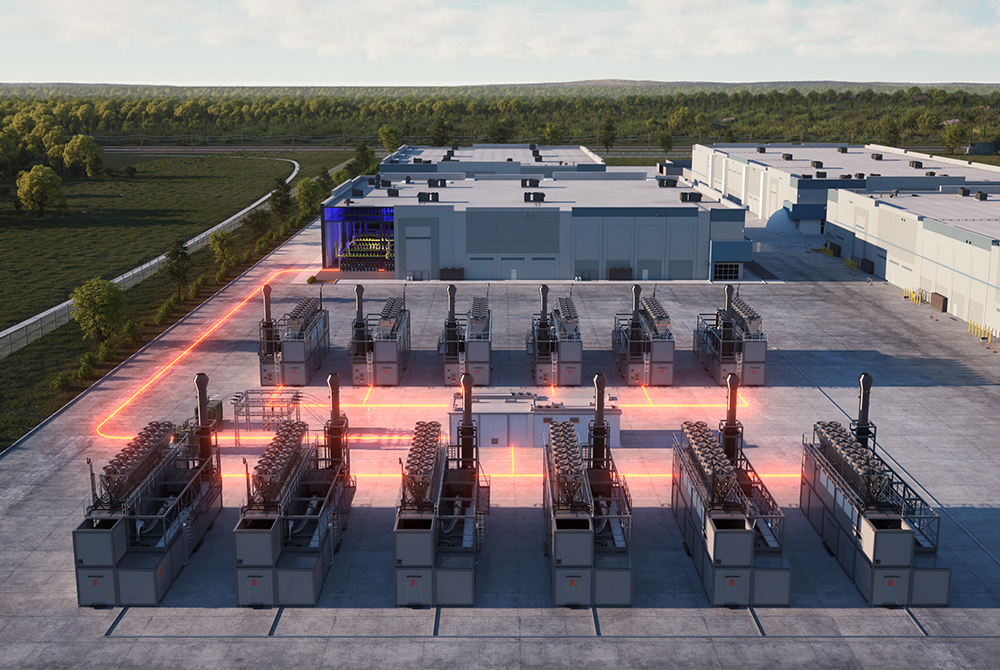
SLB and Liberty Energy have agreed to form a strategic alliance focused on modular data center infrastructure and integrated power generation for new data center projects globally. The planned tie-up targets a problem many builders are running into as AI and high-performance computing drive capacity growth: getting power online fast enough, including behind-the-meter options that can move on a different schedule than a traditional utility interconnection.
Under the planned alliance, SLB will provide modular infrastructure solutions, project execution capabilities, and global market reach. Liberty will provide modular power generation systems, behind-the-meter intelligent power controls, and operational expertise. The companies also said they plan to collaborate on future technology initiatives aimed at improving the efficiency, flexibility, and environmental performance of data center energy systems, including hybrid power systems, digital energy management, and advanced power architectures.
Behind-the-meter generation is increasingly part of the conversation for high-density builds because it can reduce dependency on grid connection timelines and give operators more direct control over capacity additions and resiliency planning. But it also shifts complexity onto the owner and design team, who now have to treat power generation, controls, operations, and maintenance as first-class infrastructure alongside switchgear, UPS, and cooling.
“The bottleneck in AI infrastructure is no longer just compute. It is the ability to deliver infrastructure and power on the timelines the market now demands,” said Gavin Rennick, president of SLB’s New Energy and Industrial business.
SLB said that since April 2024 it has shipped more than 1.3 GW of prefabricated modular infrastructure for data center projects, and it expects cumulative deliveries to exceed 2 GW globally by year-end. Liberty said it plans to deploy approximately 3 GW of power projects by 2029.
SLB and Liberty Energy did not disclose customer names, project locations, or specific system configurations as part of the planned alliance.
Source: SLB