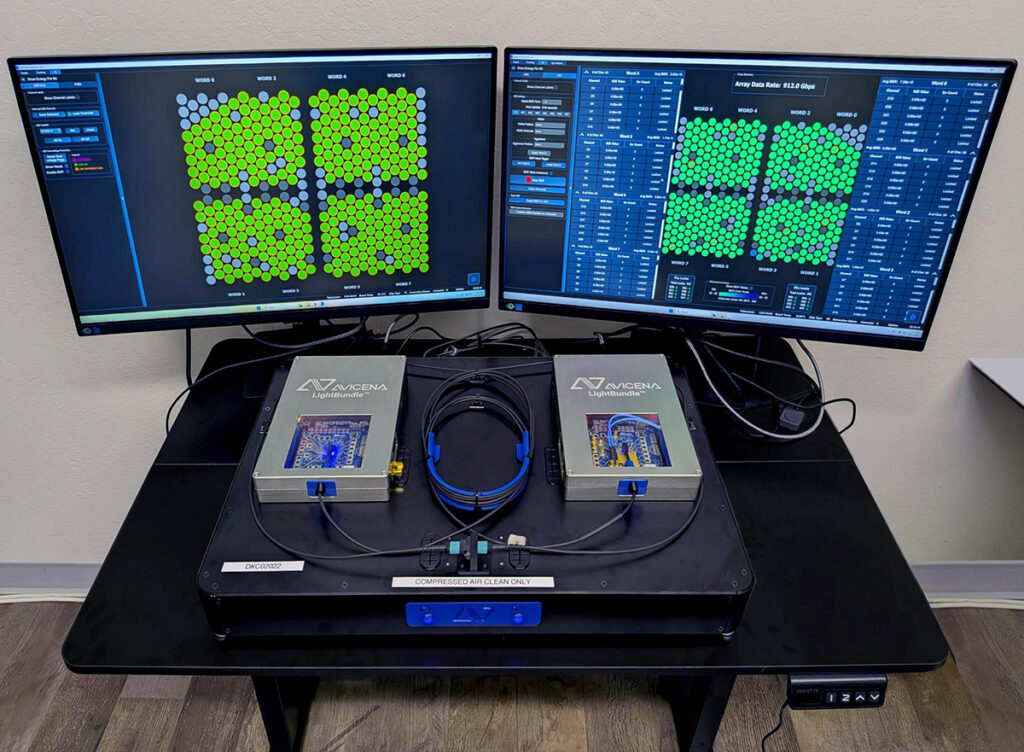


AFL and Alcyon Photonics have formed a collaboration focused on higher-efficiency fiber-to-PIC coupling aimed at multi-core optical connectivity for AI and hyperscale data center applications. The work targets optical packaging and interconnect integration challenges that show up as clusters scale and bandwidth targets move to 800G, 1.6T, and beyond.
The effort combines Alcyon Photonics’ photonic design, optical coupling optimization, and manufacturable photonic integrated circuit (PIC) solutions with AFL’s precision fiber connectivity, manufacturing, and optical interconnect production experience. The companies’ stated goal is to deliver scalable fiber-to-PIC coupling technologies that simplify integrating photonic devices, improve manufacturing efficiency, and support growing bandwidth demand in AI infrastructure.
For data center engineers and network architects, the practical angle is packaging: fiber-to-PIC coupling efficiency and manufacturability can dictate whether a silicon photonics design is deployable at scale. Multi-core optical interfaces are also becoming a key piece of the density problem, where more optical lanes need to fit into tighter front-panel and module footprints without making assembly and test unmanageable.
Alcyon Photonics CTO Enrique Frutos said, “Efficient optical packaging has become one of the key challenges for next generation photonic systems,” adding that the companies are “creating solutions that help customers accelerate the deployment of AI and high-performance computing infrastructure.” Antonio Castano, Market Development Director at AFL, said the collaboration is intended to provide “advanced multi-core connectivity solutions that support the next generation of AI data centers.”
AFL and Alcyon Photonics are positioning the joint work as an end-to-end path spanning photonic design through fiber connectivity, with an emphasis on manufacturability and volume scalability.
Source: AFL