
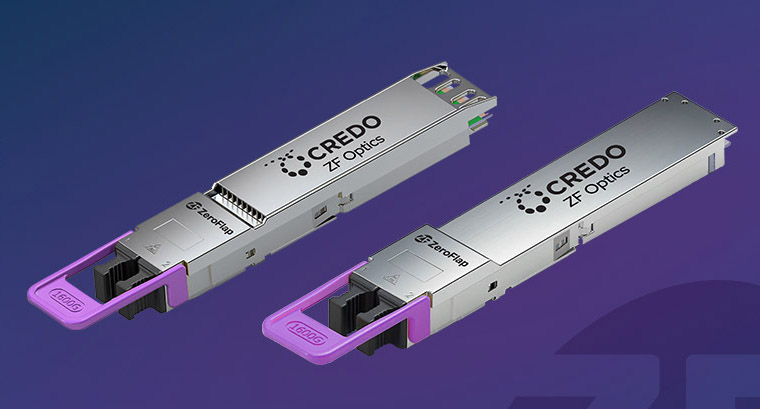
Credo has added 224G-per-lane, 1.6T optical transceivers to its ZeroFlap portfolio, targeting AI network infrastructure where link stability and faster fault isolation can directly affect how quickly clusters get into production. The company is pairing real-time optical link health telemetry with its optical DSP and silicon photonics to help operators detect and mitigate “link flaps” and fiber issues before they hit workloads.
The new ZeroFlap (ZF) optical transceivers combine Credo’s 224G-per-lane optical DSP, the company’s Kfir200 silicon photonics-based photonic integrated circuit (SiPho PIC), and its latest-generation PILOT diagnostic and analytics platform. Credo says this extends its ZeroFlap reliability architecture to 1.6T port speeds and marks the first products to incorporate the company’s “field-proven DSP” with its SiPho PIC.
On form factors, Credo lists 2xDR4, 2xFR4, and DR8 options, and describes the family as delivering 1.6T aggregate bandwidth based on its 224G lane technology. For operators, the practical point is operational: as port speeds climb, the tolerance for intermittent optical problems drops fast, and the cost of debugging link instability across a large fabric can be ugly.
Credo’s latest-generation optical DSP includes OCP-standardized ZeroFlap telemetry features. The company also calls out per-port power efficiency and signal integrity, and says the pairing of its DSP with the Kfir200 SiPho PIC is co-optimized to reduce insertion loss and improve link margin through tighter electrical and photonic integration.
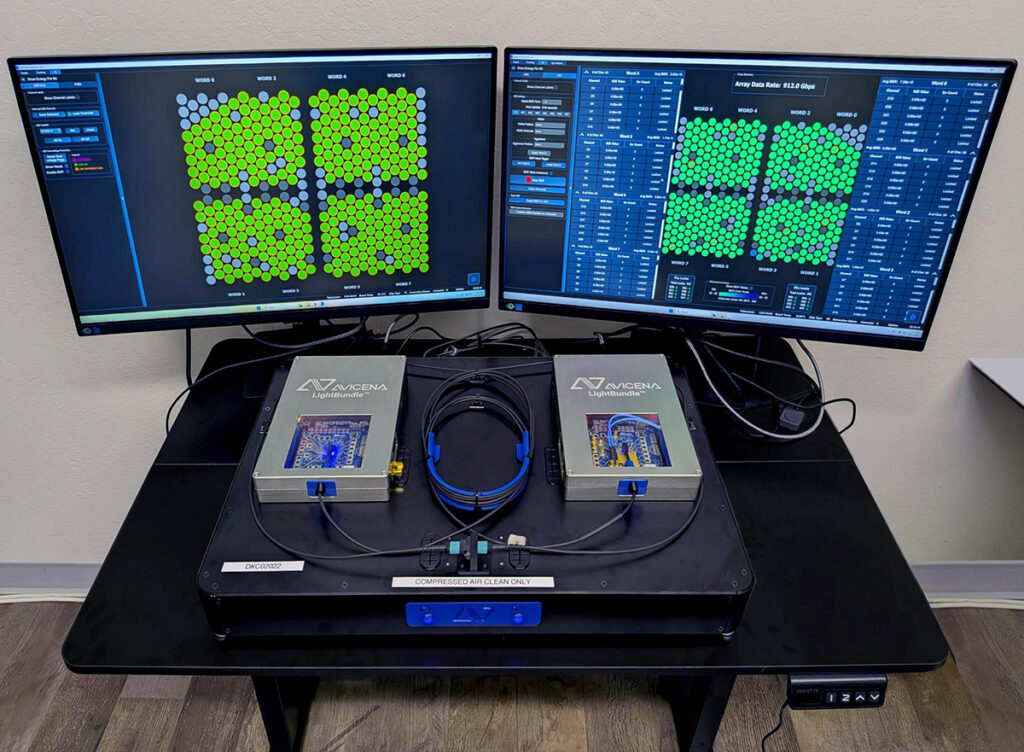
PILOT adds continuous link health monitoring, real-time telemetry streaming, and proactive detection of fiber issues and link flaps. Credo ties this directly to “time to first token,” framing the goal as getting AI clusters online faster while protecting uptime once they’re running.
The company also describes several operational features enabled by the platform, including bidirectional remote telemetry (collecting link health data from both ends of a link from either endpoint), remote firmware update for the far end, and non-volatile event logging for historical performance trends. For deployment flexibility, Credo says the transceivers support a range of AI data center topologies, including configurations requiring “fiber shuffle.”
On software integration, Credo says PILOT telemetry extensions reside on network switches and support SONiC and other switch operating systems. Hardware-wise, the transceivers are available in Integrated Heat Sink (IHS) and Riding Heat Sink (RHS) variants for switch-side and server-side installations.
“ZeroFlap Optics constantly monitor every link with built-in telemetry that detects warning signs to notify operators and avoid costly link flaps,” said Ameet Suri, VP of Product at Credo. “That means customers get their clusters running faster.”
Source: Credo