
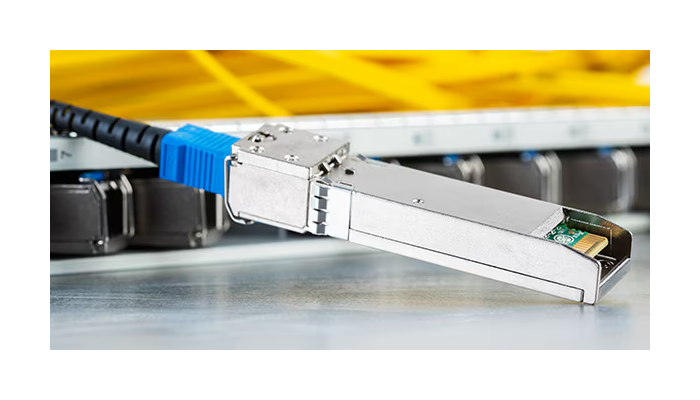
Dow has launched DOWSIL TC-3120 Thermal Gel, a silicone-based thermal interface material aimed at optical transceivers and other high-speed electronics where small air gaps and contamination risk can become reliability problems. The material is designed to improve heat transfer while meeting “optical-grade cleanliness” requirements that matter around photodiodes, optical fibers, and lenses.
DOWSIL TC-3120 Thermal Gel has an approximate thermal conductivity of 12 W/m·K, which Dow describes as the highest thermal conductivity among its commercially available silicone gels. The gel is designed to minimize oil bleed and condensed outgassing, two contamination paths that can degrade optics and electronics over time.
Dow is targeting the material at 800G and 1.6T optical modules, along with dense electronic assemblies and other high-speed data applications that can run hot at the module-to-heatsink interface. In data center hardware, that puts the product squarely in the zone where thermal margin is tight and where contamination control isn’t just cosmetic—residue can show up as signal integrity, link stability, or long-term failure issues.

On the mechanical and process side, the gel is supplied as a flowable paste and can be pressed to a minimum bondline thickness of 200 µm. It’s a one-part, reworkable material, and curing can be accelerated with heat. Dow also says the gel is readily dispensable and supports controlled extrusion rates, despite being highly loaded with thermally conductive fillers—an important practical detail when consistent bond lines and throughput matter in production.
The company says the gel is designed to withstand high temperatures and humidity, shock and vibration, and repeated thermal cycling. Dow also calls out resistance to cracking, staying in place under mechanical stress, and resisting slumping in vertically oriented modules such as optical transceivers. That vertical-stability point is a blunt reminder that “high conductivity” alone doesn’t save you if the TIM migrates, pumps out, or contaminates adjacent surfaces after a few thermal cycles.
“DOWSIL TC-3120 Thermal Gel maximizes thermal transfers without sacrificing reliability, especially in optical and high-speed data applications,” said Cathy Chu, Global Strategic Marketing Director, Consumer & Electronics, Dow.
The company recommends the gel for module-to-heatsink interfaces with tolerance stackups or uneven surfaces, and says it’s available globally.
Source: Dow