
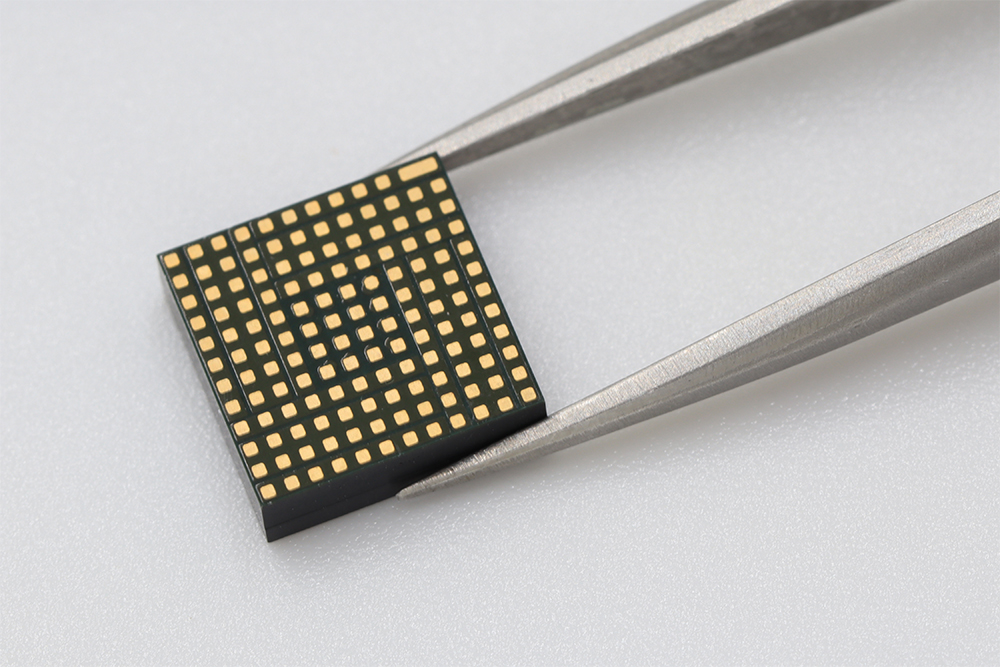
Lotus Microsystems has launched vStrata, a vertical power delivery platform that combines power delivery and thermal management into a single low-profile module architecture aimed at AI accelerator systems. The first vStrata platform module is LSC0580, with engineering samples expected to ship in Q3 2026.
Lotus is pitching vStrata as an answer to rising current demand in “last-inch” distribution to modern xPU devices, where losses and thermal constraints collide near the point of load. The platform is built around the company’s proprietary silicon Power Interposer Technology (PIT), which brings power directly beneath the processor while addressing thermal load at the same location.
The LSC0580 has “successfully taped out” and is being developed with “leading xPU and AI infrastructure partners,” according to the company. Lotus describes the platform as targeting kiloampere-class AI power demands, with up to 96% point-of-load efficiency. The company also claims the architecture is designed to reduce power conversion losses by over 50%.
Thermally, Lotus says vStrata uses a silicon-based substrate intended to improve thermal conductivity and manage heat “directly at the point of load.” In “optimized configurations,” the company claims the approach can reduce operating temperatures by up to 25 °C, with the stated goal of eliminating hotspots.
Mechanically, the platform is designed to be low profile, with a roadmap “below 1 mm.” Lotus says minimizing the electrical distance between the power stage and processor improves dynamic performance and supports load transients exceeding 10 A/ns without external capacitors.
That tight coupling of power and thermal design is the real engineering bet here. As AI boards push higher instantaneous current and faster load steps, distribution impedance, transient response, and heat extraction stop being separate design problems. A module that forces co-design could simplify board-level tradeoffs, but the claimed efficiency and temperature gains will matter most once they’re validated in real accelerator platforms.
“We have reached a point where AI compute performance is constrained by physical architecture,” said Hans Hasselby-Andersen, CEO of Lotus Microsystems. “By integrating both into a single co-engineered platform, we help data centers increase compute density while reducing the power and cooling overhead that drives AI infrastructure cost.”
Lotus says vStrata is designed for integration with established Tier-1 reference designs and existing power management controllers, and that it is working with Tier-1 hyperscalers through an Early Access Program. Product information is posted at lotus-microsystems.com/vstrata.
Source: Lotus Microsystems