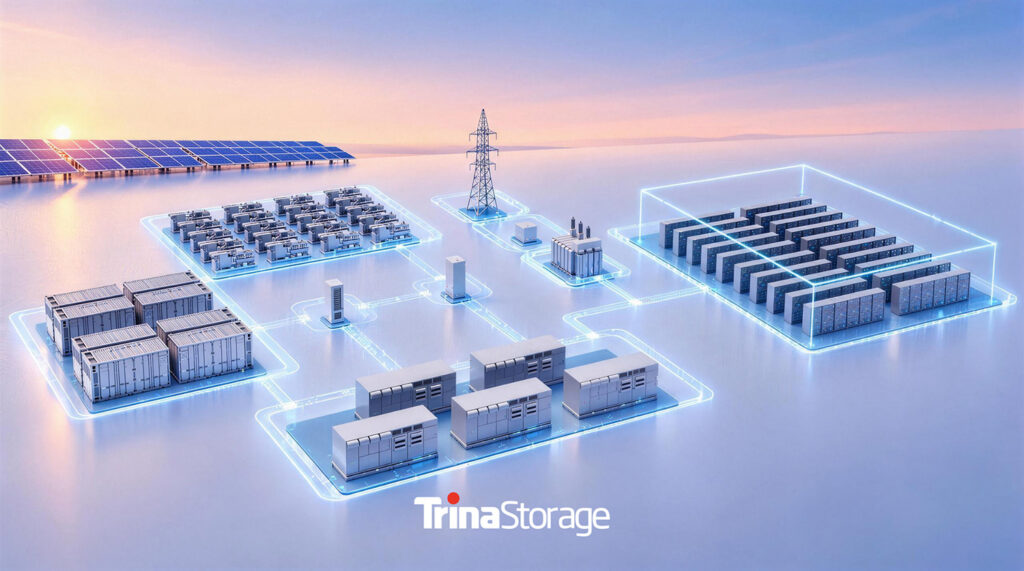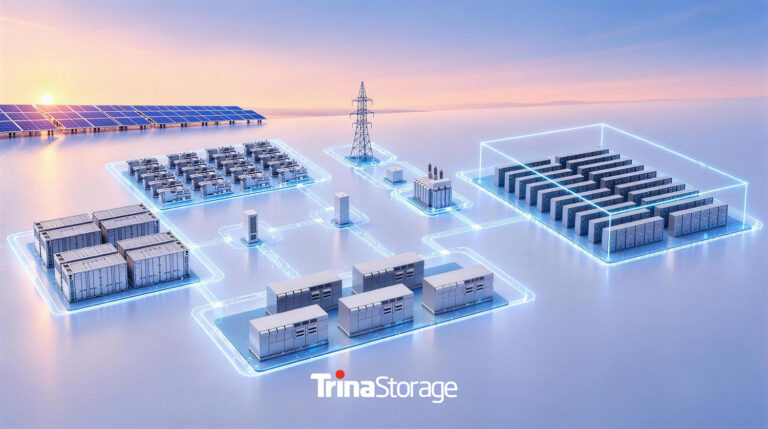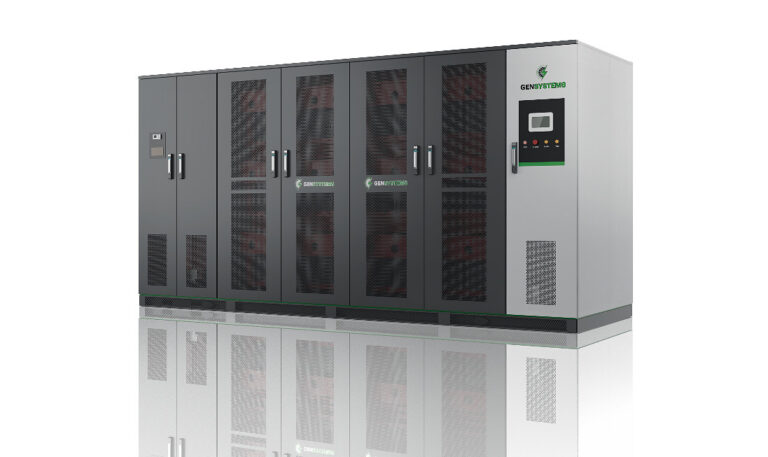
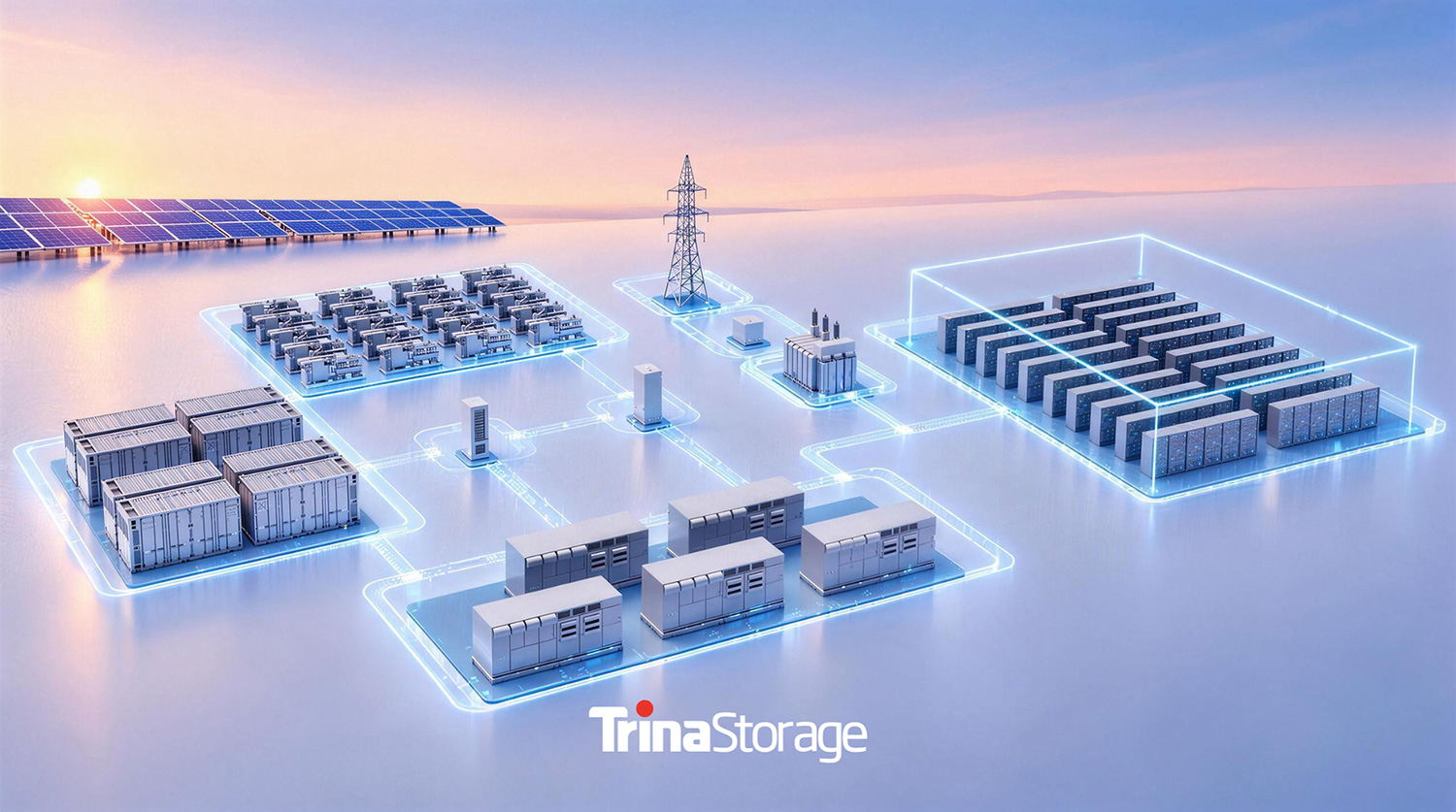
Trina Storage has launched the Elementa Hybrid Genset, a modular on-site power system that combines gas generation with battery energy storage and a hybrid plant controller aimed at AI data centers. The system is intended for projects where grid interconnection is delayed, limited, or unavailable, including grid-constrained, bridge-to-grid, and off-grid sites.
Elementa Hybrid Genset pairs gas-fired generation from qualified engine partners with Trina Storage’s Elementa DC battery systems and Electra AC platform, coordinated by a hybrid plant controller. Trina Storage is acting as the system integrator for the overall plant.
The gas side is based on reciprocating engines rated up to 2.5 MW, supporting modular configurations. On the storage side, the Elementa + Electra BESS portion is described with reference configurations built around 5 MW and 10 MW building blocks and is intended to provide fast power response and grid-forming capability. A scalable control architecture is designed to support deployments ranging from 5 MW up to 1 GW.
For operators, the core engineering claim is about response time and stability: gas generators can provide sustained power, but they may not track rapid AI-driven load swings on their own, while BESS can respond quickly but isn’t intended to carry long-duration outages without generation behind it. A tightly coordinated hybrid plant can reduce the size of the “instantaneous” problem that gensets have to solve, which can matter a lot when you’re trying to keep power quality and ride-through behavior predictable during fast step loads.
Trina Storage describes three controller functions as central to the design: load transient sensing to predict demand changes and trigger rapid BESS response, hybrid power coordination that shifts load from the BESS to the gas generators as gensets ramp, and fault isolation intended to identify and isolate affected equipment while the BESS and remaining generators support critical loads and restore power across the site.
The company lists four reference scenarios the system is designed to support: grid-connected with backup generation, grid-constrained, bridge-to-grid, and off-grid. Solar PV can also be integrated.
Two electrical architectures are offered: “Load Sensing,” described as prioritizing cost efficiency and system performance, and “Double Conversion,” described as providing full electrical isolation and enhanced power quality. Trina Storage says it is validating the system through simulation, hardware-in-the-loop testing, and an integrated validation platform using real generation, conversion, and storage equipment, with further testing of grid-forming functionality and hybrid control strategies ongoing alongside certification activities.
“AI data centers have demanding power requirements, particularly when grid capacity is constrained, or workloads fluctuate rapidly. Elementa Hybrid Genset brings gas generation, battery storage and hybrid controls together in one system architecture, designed to coordinate these resources according to project needs,” said Eric Cao, Vice President of Trina North American PV and BESS Business.
Source: Trina Storage