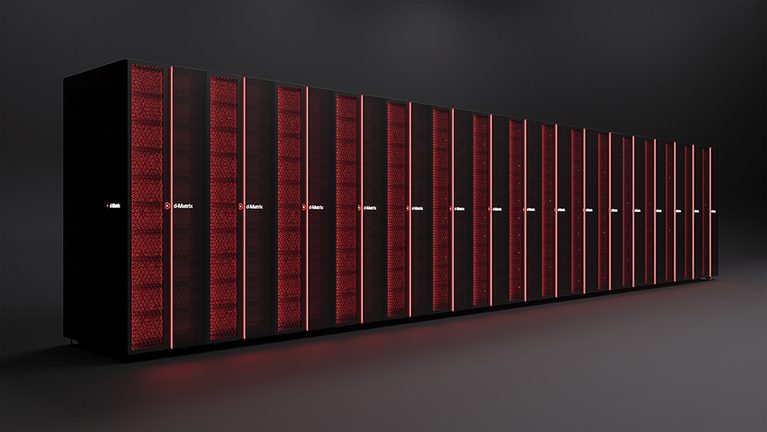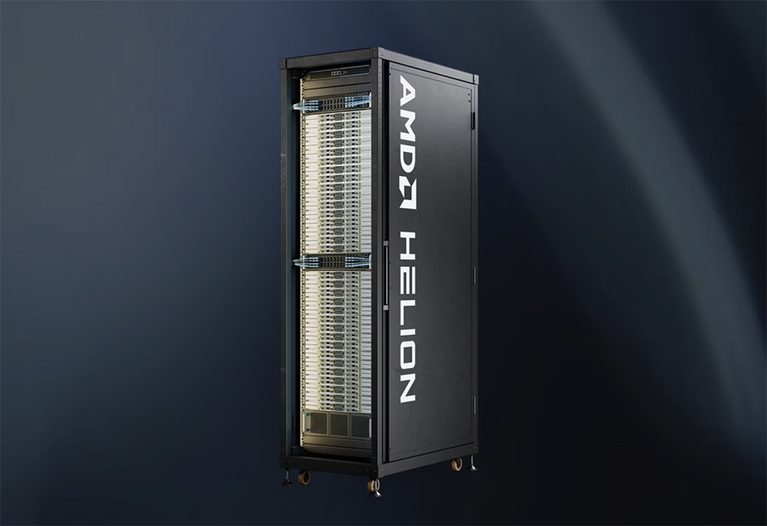
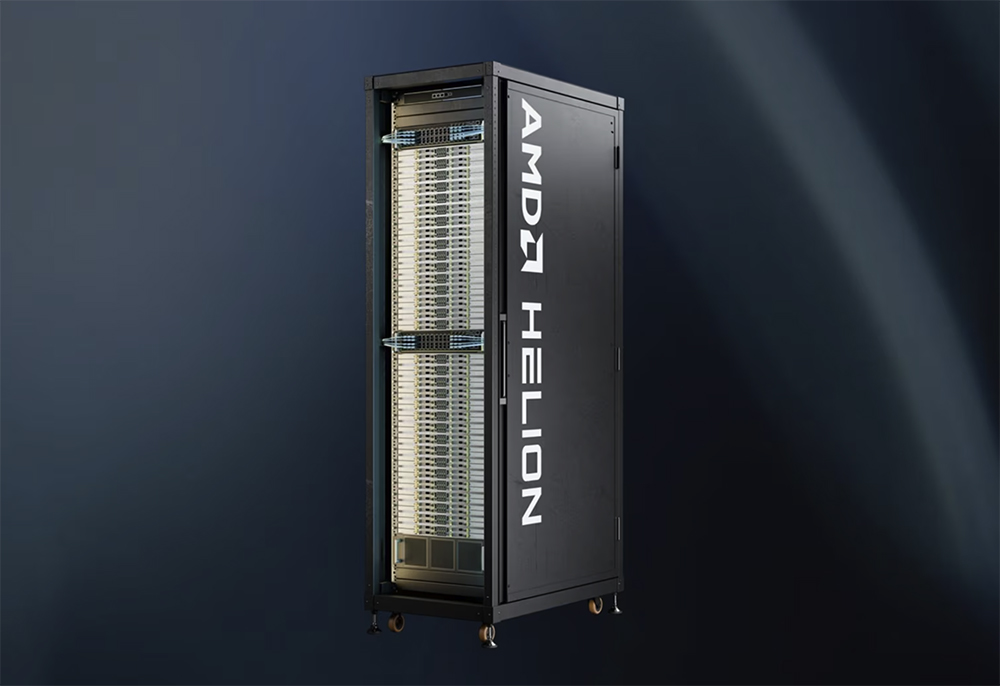
AMD has introduced AMD Helion, an agentic AI rack blueprint built on an Open Compute Project (OCP) spec-design and powered by AMD compute. The goal is flexibility at rack scale—letting operators tune CPU core density, performance, and power for different agentic workloads, with options that range from CPU-only builds to integrated CPU/GPU configurations.
AMD describes Helion as an open hardware and software design that includes an “integrated token router” intended to direct agents’ model calls across frontier and open-source models. AMD also plans to contribute the AMD Helion specification to OCP.
The rack blueprint supports both liquid- and air-cooled versions, with configurations that AMD says can be tailored by partners and customers. Two example configurations outlined for Helion are a CPU-only rack aimed at hyperscale deployments, and an all-in-one rack intended for enterprise agentic AI.
In the CPU-only configuration, Helion uses 6th Gen AMD EPYC processors and is specified at up to 32,768 CPU cores per rack. AMD frames that design as dedicated capacity for agent execution, with connections to separate model inference infrastructure.
The all-in-one configuration combines AMD EPYC CPU nodes, AMD Instinct MI350P GPU nodes, and general-purpose compute “on one platform.” AMD positions that as an enterprise-focused concept that brings agent execution and model inference together in a single rack-scale design.
There’s a practical reason to pay attention to the CPU emphasis here: agentic systems can be bottlenecked by orchestration, tool execution, and workflow control paths that don’t map cleanly to pure GPU throughput. A rack blueprint that explicitly allows CPU-heavy builds—alongside GPU-accelerated variants—fits how many teams are actually trying to stand up agentic pipelines in production.
“Agentic AI is not a single workload. It spans personal agents, enterprise applications, code execution and complex workflows, each with different compute requirements,” said Dan McNamara, senior vice president and general manager, Compute and Enterprise AI, AMD. “With AMD Helion, we are bringing AMD EPYC performance, open software and flexible rack designs together so our partners can build systems around customer needs and make efficient use of available power.”
AMD said Helion rack configurations are currently under development with ecosystem partners and are planned to be available in November 2026. Ecosystem support statements in the release name Cisco, Dell Technologies, Hon Hai Technology Group, HPE, Lenovo, QCT, Supermicro, and Wiwynn.
Source: AMD