OpenMetal has added two private GPU server lines to its v5 hardware catalog: the RP6000, based on the NVIDIA RTX PRO 6000 Blackwell Server Edition, and the H200, based on the NVIDIA H200 NVL. Both systems are single-tenant bare metal and use OpenMetal’s v5 platform built around Intel Xeon 6000-series CPUs and DDR5-6400 memory, targeting AI training, inference, and HPC workloads with fixed monthly billing.
At the platform level, OpenMetal’s v5 GPU servers are configured with dual Intel Xeon 6530P processors, 1 TB of DDR5-6400 memory standard (expandable to 2 TB), PCIe 5.0 connectivity, NVMe storage options, and 40 Gbps private networking. Keeping CPU, memory, and I/O aligned with the rest of the v5 lineup matters operationally: it reduces the “special-case” hardware tier problem that can complicate capacity planning, spares strategy, and cluster design when GPU nodes don’t match the broader fleet.
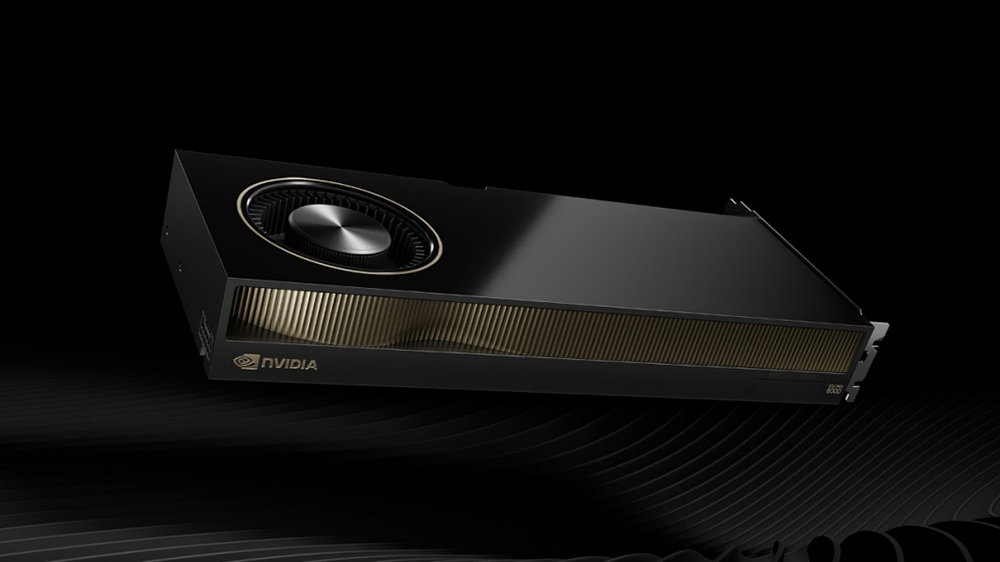
The RP6000 supports one or two NVIDIA RTX PRO 6000 Blackwell Server Edition GPUs per server. Per GPU, OpenMetal lists 96 GB of GDDR7 memory, 1.79 TB/s of memory bandwidth, and 24,064 CUDA cores. OpenMetal positions the RP6000 for inference serving, fine-tuning, rendering, and mixed AI and visualization pipelines where VRAM capacity is a primary constraint.
The H200 supports one or two NVIDIA H200 NVL PCIe GPUs per server. Per GPU, OpenMetal lists 141 GB of HBM3e memory and 4.8 TB/s of memory bandwidth, aimed at large-model training and memory-bound inference. Each H200 server includes a five-year NVIDIA AI Enterprise software subscription.
Both server lines are delivered as single-tenant bare metal with no shared hypervisor between customer workloads and hardware. OpenMetal says customers can run PyTorch, TensorFlow, JAX, and Hugging Face Transformers, and deploy servers standalone or as multi-node GPU clusters over OpenMetal’s private network. The blunt implication for infrastructure teams is straightforward: you’re buying isolation and predictability (and giving up some of the elasticity of shared GPU pools), which can be the right trade when performance variance and noisy-neighbor risk are unacceptable.
“Customers running AI and HPC workloads get fully dedicated GPUs on the same modern Xeon 6000 platform, with transparent monthly billing and infrastructure they actually control, not throttled, metered slices of someone else’s cluster,” said Jamie Tischart, CTO of OpenMetal.
The RP6000 and H200 are available now in OpenMetal’s US East data center in Ashburn, Virginia, and OpenMetal says additional locations are planned. Proof-of-concept deployments are also available.
OpenMetal did not provide a direct product page link in the provided text.
Source: OpenMetal