
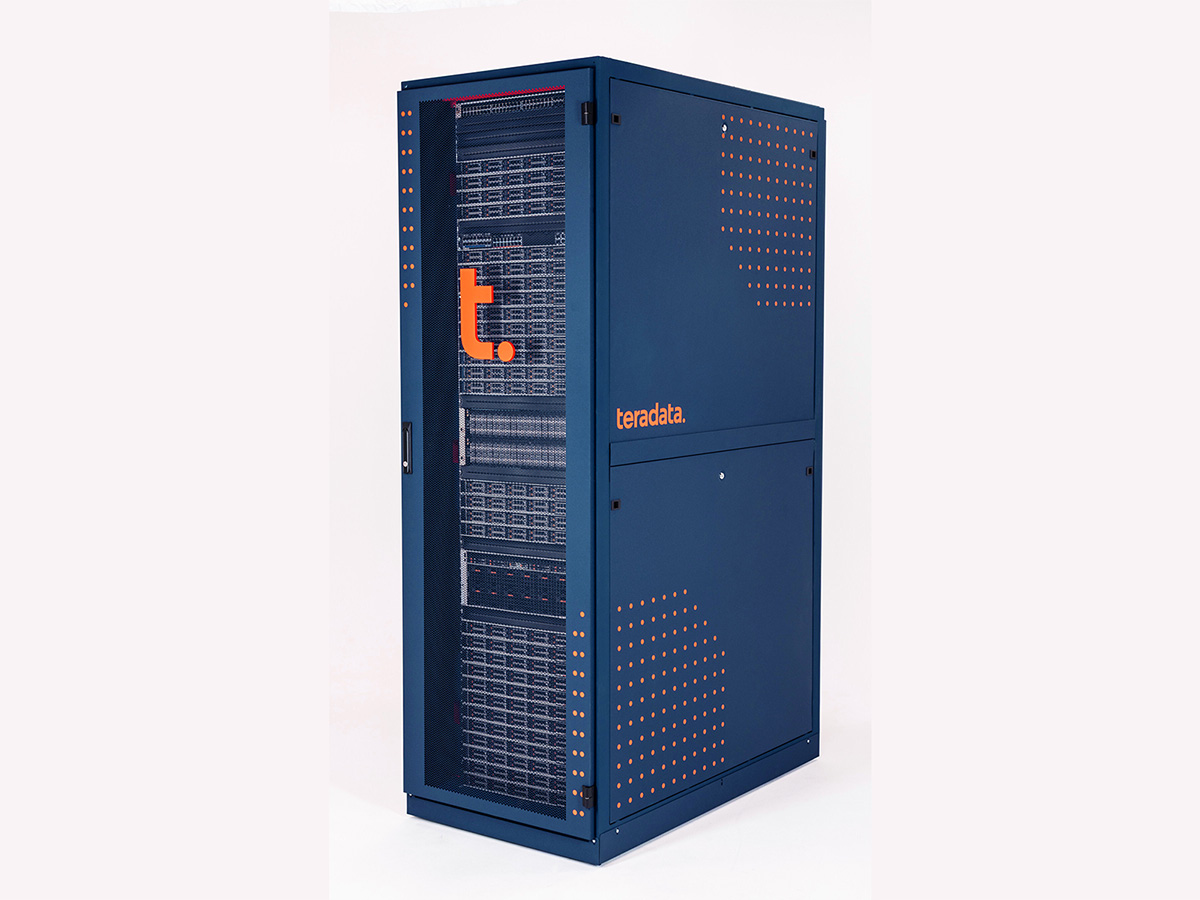
Teradata has introduced the Teradata Factory, an on-premises deployment option for the Teradata Autonomous Knowledge Platform aimed at enterprises running AI and analytics across hybrid environments. The system is built on Dell Technologies enterprise compute and storage and is designed to run EDW, lakehouse, and advanced AI workloads under a single management plane.
Teradata says the Teradata Factory unifies the company’s full software stack—including AI Studio—so capabilities, governance, and management stay consistent between cloud and on-premises deployments. The on-premises system is described as integrated and ready to run with CPUs and GPUs, with modular scaling intended to support expansion “from pilot to production” on an organization’s timeline.
For data center and infrastructure teams, the practical angle is straightforward: AI programs that hit cost, data residency, or governance constraints in public cloud often end up driving more on-premises and hybrid designs. But “on-prem” can still mean a pile of separately sourced compute, storage, GPU nodes, fabric, database engines, and AI tooling that has to be validated and operated as one. Teradata Factory is positioned as a pre-engineered alternative, with Teradata taking responsibility for delivering an integrated hardware-and-software system rather than leaving operators to assemble the stack.
Teradata also links the platform to Dell’s AI portfolio, stating that it integrates with the Dell AI Factory and Dell AI Data Platform to support data curation, governance, and accessibility for AI workloads. On the platform management side, Teradata describes “Tera agents” as pre-built agents that autonomously perform infrastructure and operational tasks, including monitoring and managing compute resources, optimizing query execution, processing telemetry, and controlling cloud and on-premises spend.
Workload controls are a central theme. Teradata says Active System Management is intended to maintain performance and SLAs for mission-critical analytics while AI teams run exploratory or resource-intensive work. On the data layer, the company lists support for Apache Iceberg, Delta Lake, and S3-compatible object storage, with the goal of keeping data stored once and accessed across cloud and on-premises environments.
“The Teradata Factory brings EDW reliability, Lakehouse flexibility, and AI horsepower together in a single on-premises system—so enterprises get the full performance of the Teradata Autonomous Knowledge Platform wherever their data, regulations, and agents require,” said Sumeet Arora, chief product officer at Teradata.
Teradata expects Teradata Factory to be available in Q3 2026.
Source: Teradata