
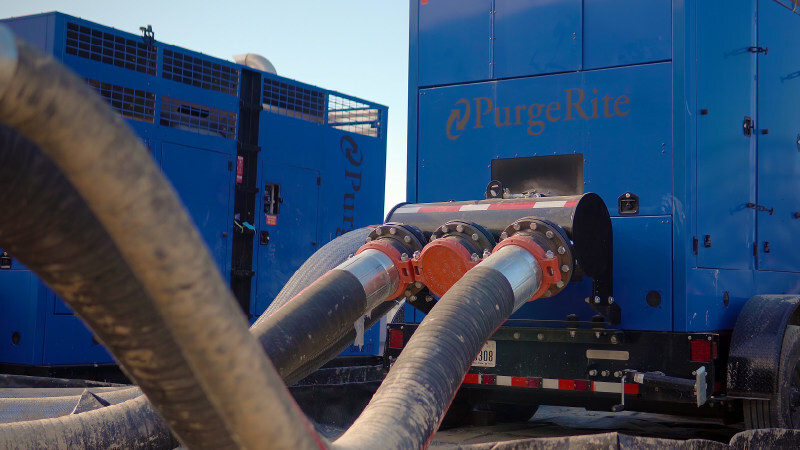
Vertiv has introduced Vertiv PurgeRite NearZero, a fluid management service aimed at reducing water use, wastewater generation, and hauling during commissioning of closed-loop hydronic systems for data centers and other mission-critical sites in North America.
The Vertiv PurgeRite NearZero service combines engineered flush planning, mechanical flushing, water treatment, filtration, reverse osmosis, and continuous water-quality monitoring. Vertiv says the process is designed to recycle flushing water throughout commissioning, reducing the volume of water that must be sourced, hauled, discharged, or disposed of while still meeting cleanliness and passivation requirements for closed-loop hydronic systems.
Commissioning is one of the moments where fluid networks can become operationally messy: contaminants have to be removed, chemistry has to be controlled, and the work often runs into local discharge restrictions and logistics constraints. And as primary and secondary fluid networks expand to support higher-density deployments, the practical burden shifts from “just flush it” to “flush it predictably, documentably, and without creating a disposal project.”
“As data centers move to higher-density architectures, fluid networks are becoming more critical to deployment speed, system cleanliness, and long-term reliability,” said Ron Bednar, senior vice president of services, Americas at Vertiv. “Vertiv PurgeRite NearZero helps customers limit water consumption, wastewater handling, and hauling complexity during commissioning while supporting the reliability required to bring mission-critical cooling systems online with confidence.”
Vertiv reports that in selected deployments, PurgeRite NearZero reduced total water consumption by up to 78%, water haul-off volumes by up to 91%, and discharge management costs by as much as 34%, compared with conventional commissioning approaches. Vertiv also says the process reduced water delivery and removal requirements by approximately 300 tanker trips at one site, which it links to lower truck traffic, fuel use, and transportation-related emissions. The company notes that results vary by site and project conditions, including incoming water quality, system contaminant levels, local hauling and disposal requirements, discharge regulations, and transportation logistics.
Source: Vertiv