Sheetak is expanding thermoelectric cooling manufacturing in Austin and hiring engineers to meet demand for chip-scale “micro-coolers” used inside AI data center optics, where temperature control has to happen at the component level rather than at the room or rack.
The company’s focus is cooling within optical transceivers and photonic packages, where lasers and optical engines operate within a narrow temperature window. Sheetak points to distributed-feedback laser drift of about 0.08 to 0.12 nm per 1 °C of temperature change, which can move a channel off its assigned wavelength.
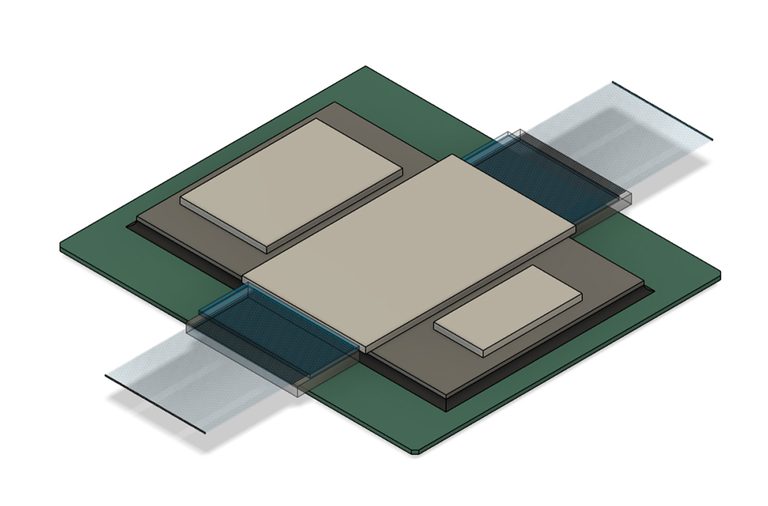
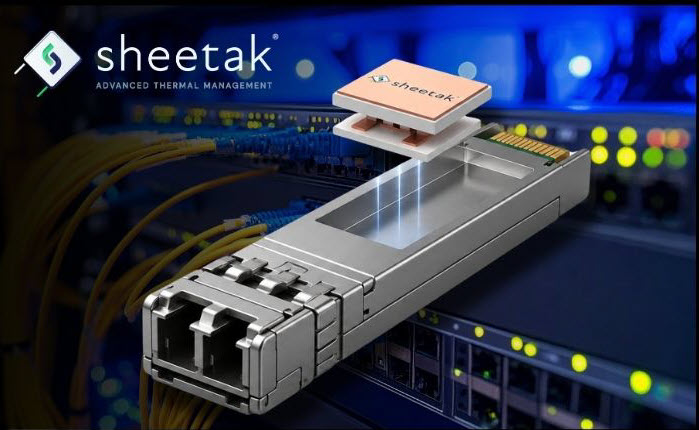
For that use case, Sheetak builds its µCENTUM micro-TEC modules. The modules start at 3.6 x 4.7 mm with a 1.45 mm profile and are designed to mount directly onto transceiver and photonic packages. Sheetak lists closed-loop temperature control of ±0.01 °C, with thermal time constants measured in seconds.
This kind of cooling is a different problem than facility HVAC. If an optical engine needs active control to stay on wavelength, the data center’s chilled water loop, CRAH airflow, and containment strategy don’t help much unless the cooling can be applied right at the package.
Beyond standard geometries, Sheetak says it works directly with “major developers of optical transceivers and data center optical infrastructure” on custom thermoelectric solutions matched to a customer’s package, power budget, and performance targets. The company also says it runs thermoelectric materials, device engineering, and manufacturing under one Austin roof, and that its vertically integrated model supports ITAR-aligned programs and domestic-sourcing requirements.
“Our customers can’t afford a thermal failure at the component level, so we work directly with their engineering teams to design and manufacture parts that fit their exact package and performance requirements,” said Kurt Devlin, chief revenue officer at Sheetak.
Source: Sheetak