
Flex introduced three new power products aimed at next-generation AI infrastructure: a 110 kW power shelf designed for NVIDIA Vera Rubin NVL72 platforms, a 30 kW Capacitive Energy Storage System (CESS), and the BMR317 intermediate bus converter for high-density compute platforms. The additions target rack-level power distribution, power-quality stabilization for dynamic AI loads, and board- and chip-adjacent conversion for accelerator-heavy servers.
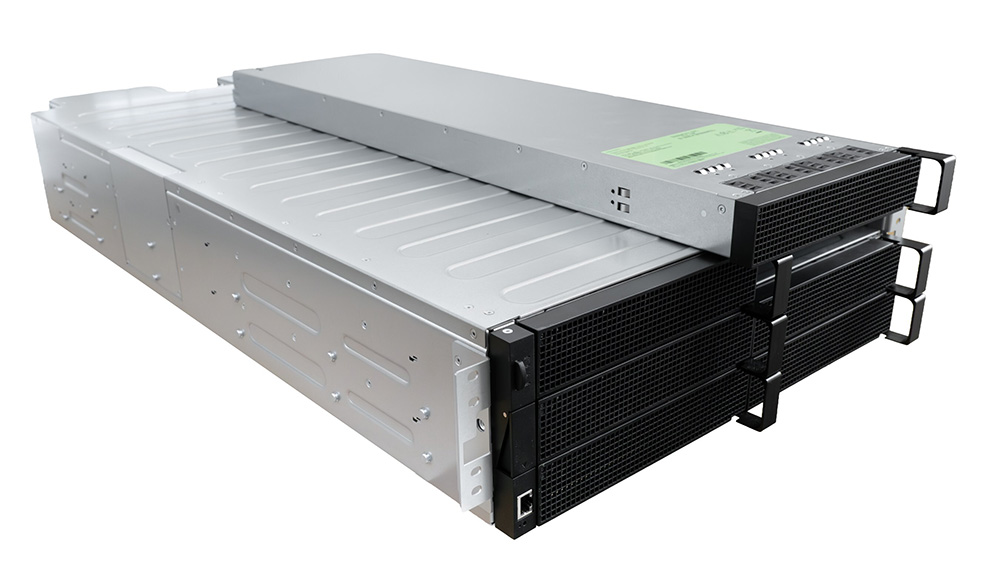
The 110 kW power shelf is designed to support scalable power distribution for NVIDIA Vera Rubin NVL72 platforms and other high-density AI environments. Flex describes the shelf as a modular rack-level power distribution building block that supports “power disaggregation,” with the practical goal of maximizing GPU density and improving infrastructure efficiency within the IT rack. Flex also positions the shelf as part of the industry transition toward 800 VDC architectures.
The new 30 kW CESS is a rack-integrated capacitive energy storage system intended to stabilize highly dynamic AI workloads by smoothing transient power demand and improving power quality. Flex says the system is compatible with both traditional AC and emerging 800 VDC environments, and is meant to work alongside battery energy storage systems (BESS) and UPS architectures. The CESS supports both 19-inch and 21-inch rack configurations.
At the component level, Flex added the BMR317 intermediate bus converter to its chip-level power portfolio. The company describes it as a compact, high-efficiency power module designed to support fast, dynamic AI processor loads in accelerator cards, servers, and xPU platforms.
The engineering takeaway is straightforward: as AI racks push higher power density, the power train has to handle larger step loads without letting voltage quality, ride-through behavior, or rack integration become the limiting factors. A 110 kW shelf and a rack-integrated capacitive buffer are both aimed at keeping distribution and transient response in check while data centers evaluate higher-voltage DC architectures.
“The rapid growth of AI is driving new demands on data center power infrastructure, from rack-scale distribution to processor-level power delivery,” said Chris Butler, President, Embedded and Critical Power, Flex.
Source: Flex