

Accelsius has released an industry-accessible reference design for two-phase, direct-to-chip liquid cooling in data centers, developed in collaboration with engineering firm Jacobs. This initiative aims to support hyperscale operators and colocation providers seeking to minimize energy usage and operational costs while accommodating high-density workloads, including those driven by artificial intelligence (AI) applications.
According to findings from the study, which modeled a 10 megawatt (MW) data center across multiple climate zones, two-phase direct-to-chip cooling provides several advantages over single-phase liquid cooling. Accelsius reports that its two-phase technology delivers up to 35% lower annual operating expenses (OpEx) and 12% lower five-year total cost of ownership (TCO), with capital expense (CapEx) comparable to single-phase systems. Additionally, the design enables operators to support 5% more graphics processing units (GPUs) within the same power envelope, a key metric for data centers serving AI and GPU-intensive workloads.
The reference concept addresses operational concerns about complexity and facility redesign requirements for two-phase cooling. Accelsius claims that facilities already planning to implement single-phase direct-chip cooling can transition to two-phase systems without major redesigns. The system integrates with existing facility water infrastructure, and the integrated overhead manifold in the Accelsius MR250 system removes the need for separate technology cooling systems or secondary loops, which can reduce both cost and system complexity.
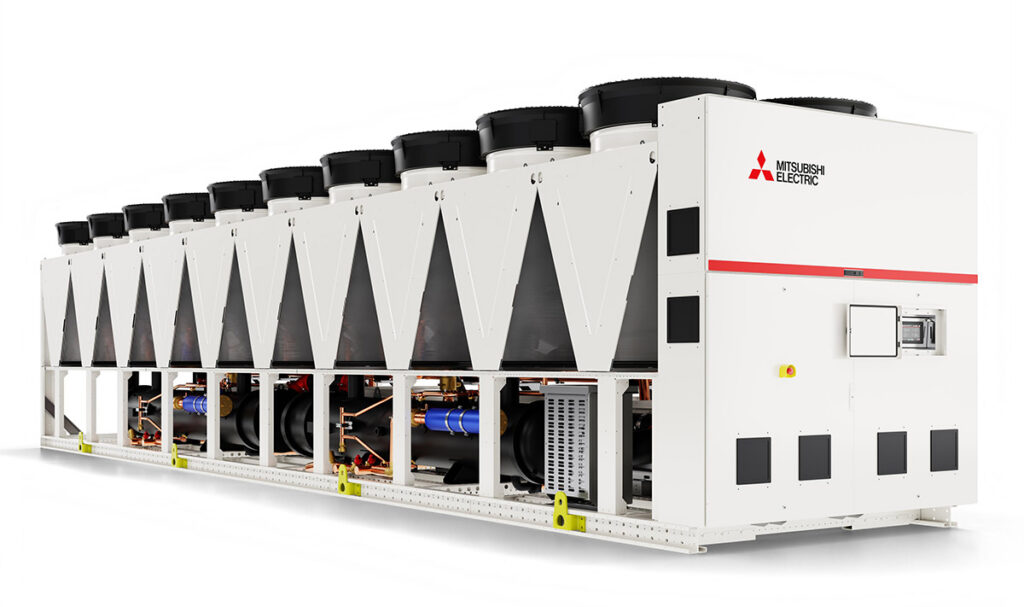
Key technical findings from the study include the ability for two-phase systems to operate with facility water temperatures up to 8°C higher than competing solutions—broadening conditions for chiller-less, free-cooling operation. The study also notes a reduction in heat rejection infrastructure and energy use: two-phase systems require only 12 fans per chiller compared to 16 in single-phase, delivering over 35% savings on OpEx related to cooling. Importantly for water-constrained regions, the study found that two-phase cooling systems require zero active water consumption, with water use limited solely to facility loop maintenance.
The reference design study was independently conducted by Jacobs, with mechanical system data sourced from multiple third parties. Accelsius is making highlights of the study publicly available, and detailed findings can be requested.
Source: Accelsius